Day 14 (Sep 29): Hornillos to Castrojeriz, 20 Km, 324 Km
Big day as we passed he 200 mile mark on our slow march across the north of Spain. Today was a short day (12.5 miles or so) so we had breakfast in the hotel before heading out. This is our first full day on the Meseta.
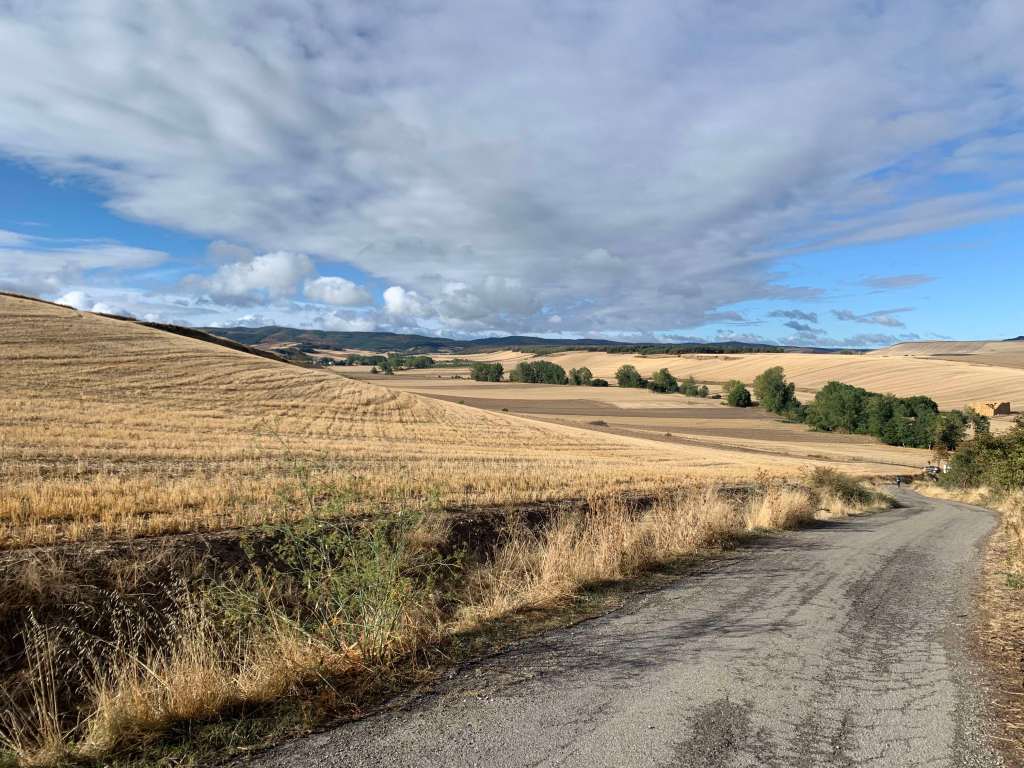
Pretty view on the Meseta
We stopped for lunch in a little town (Rabé de las Calzadas). This is usually what we do – either breakfast and lunch (on longer days) or just lunch on the trail.
Heading into town.
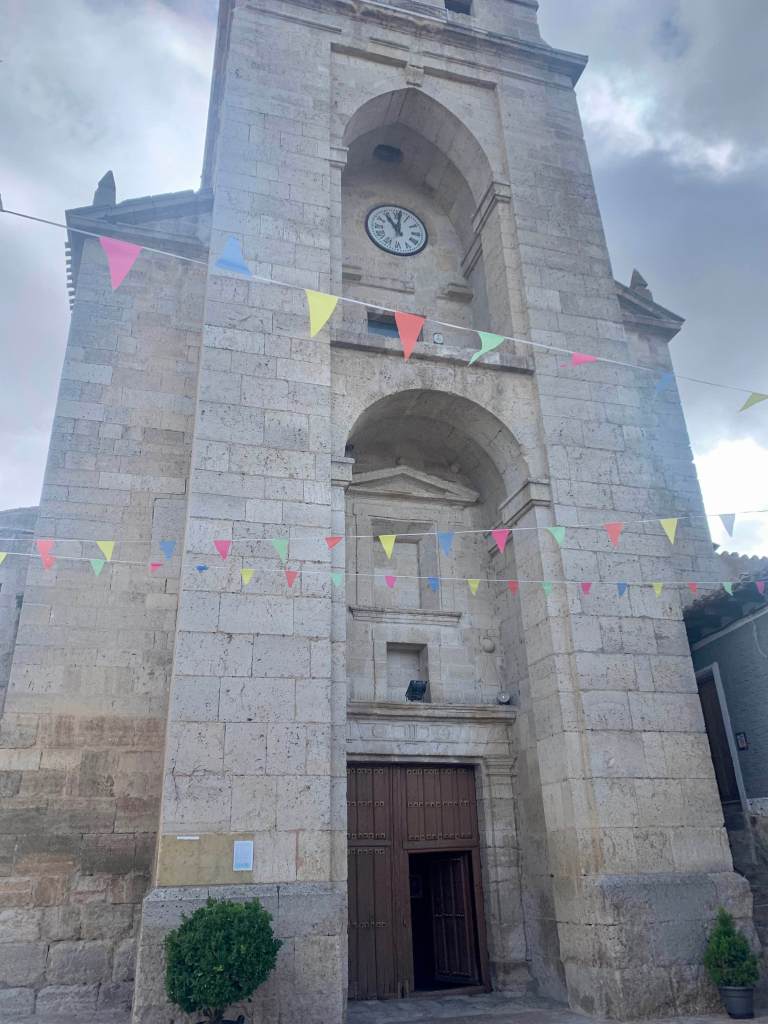
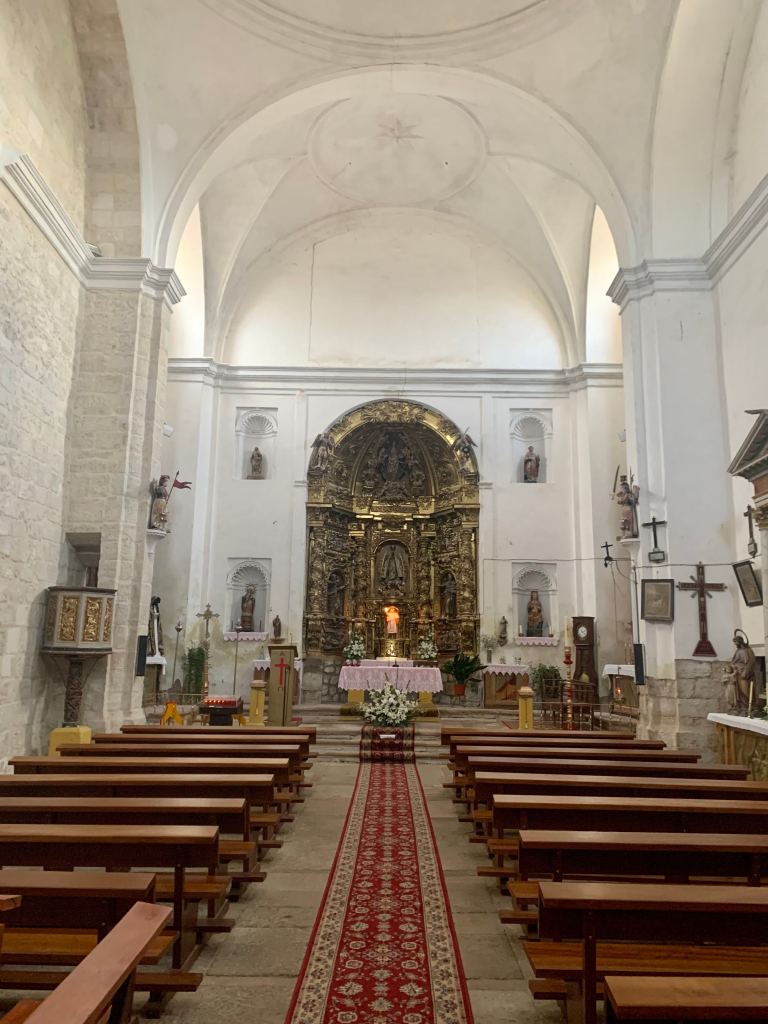
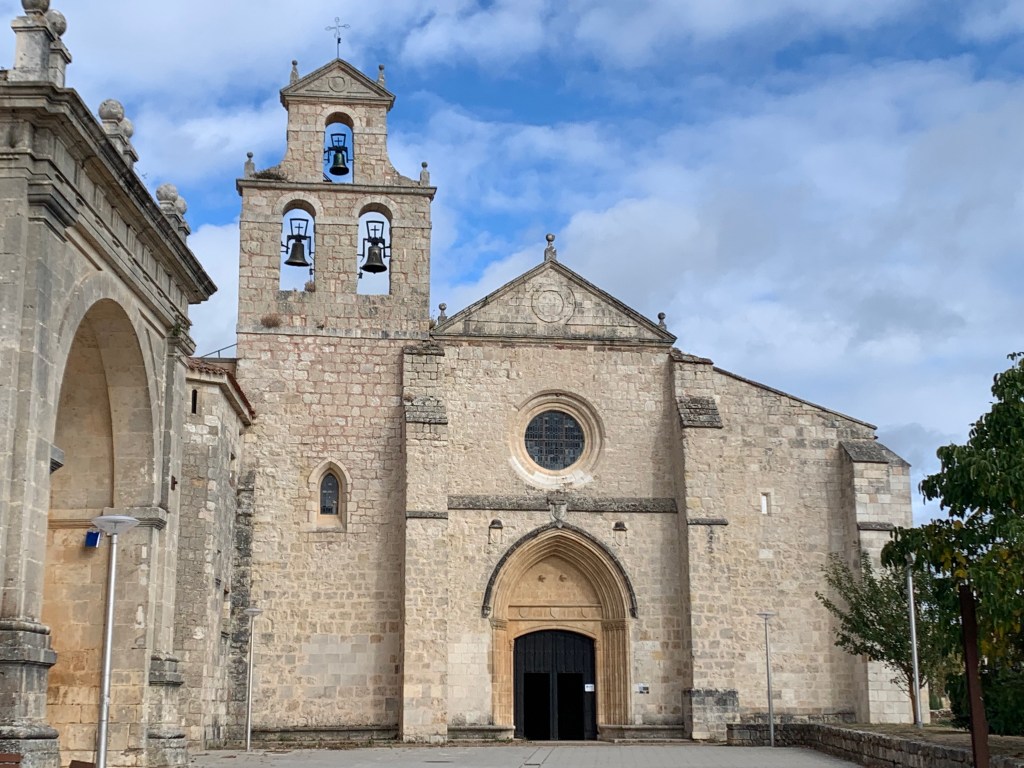
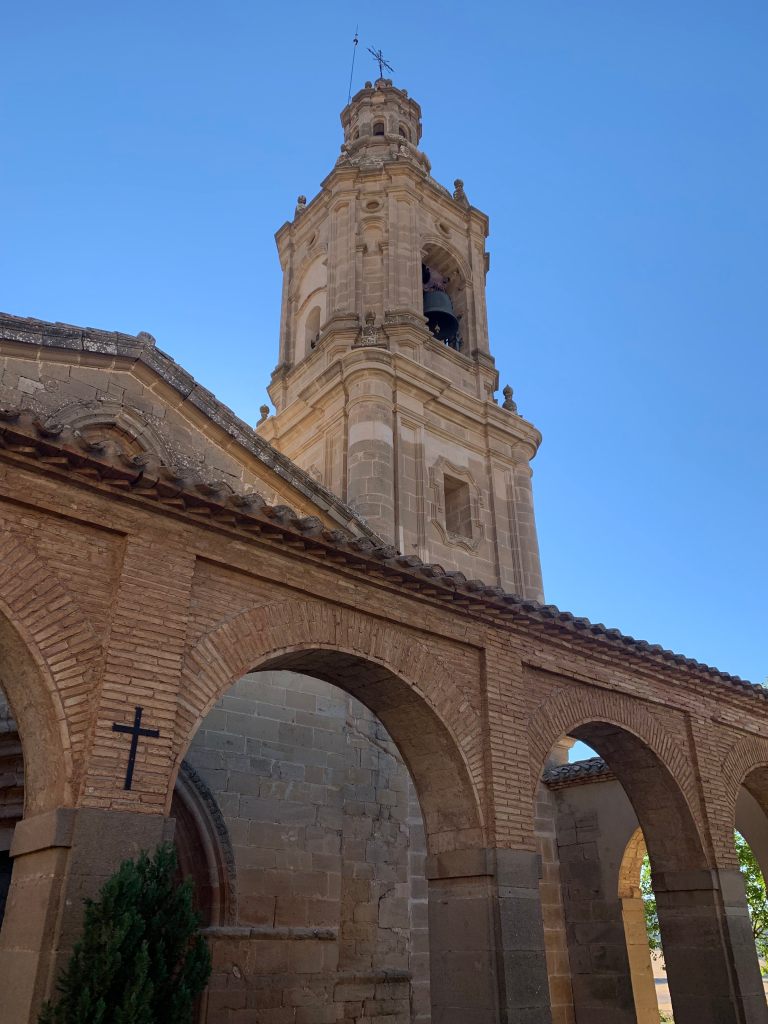
A nice thing about the Camino is the response from the locals. Everyone smiles and says “Buen Camino” when they see you. And each little town we pass through has a wonderful church, usually from the 15th century or before.
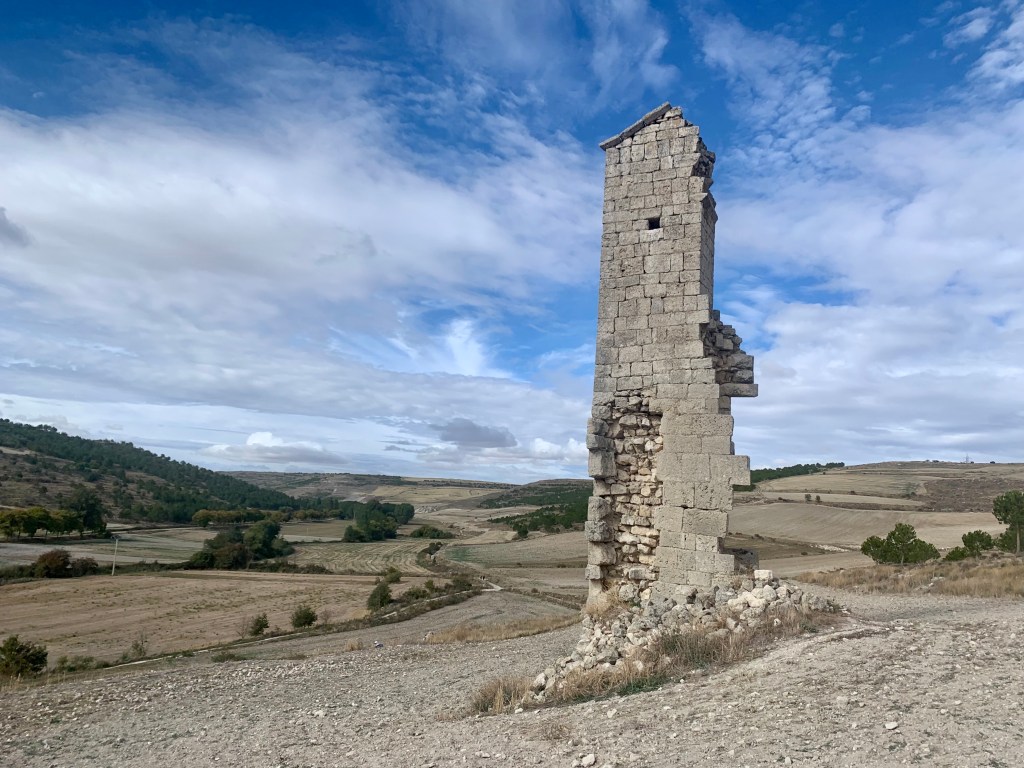
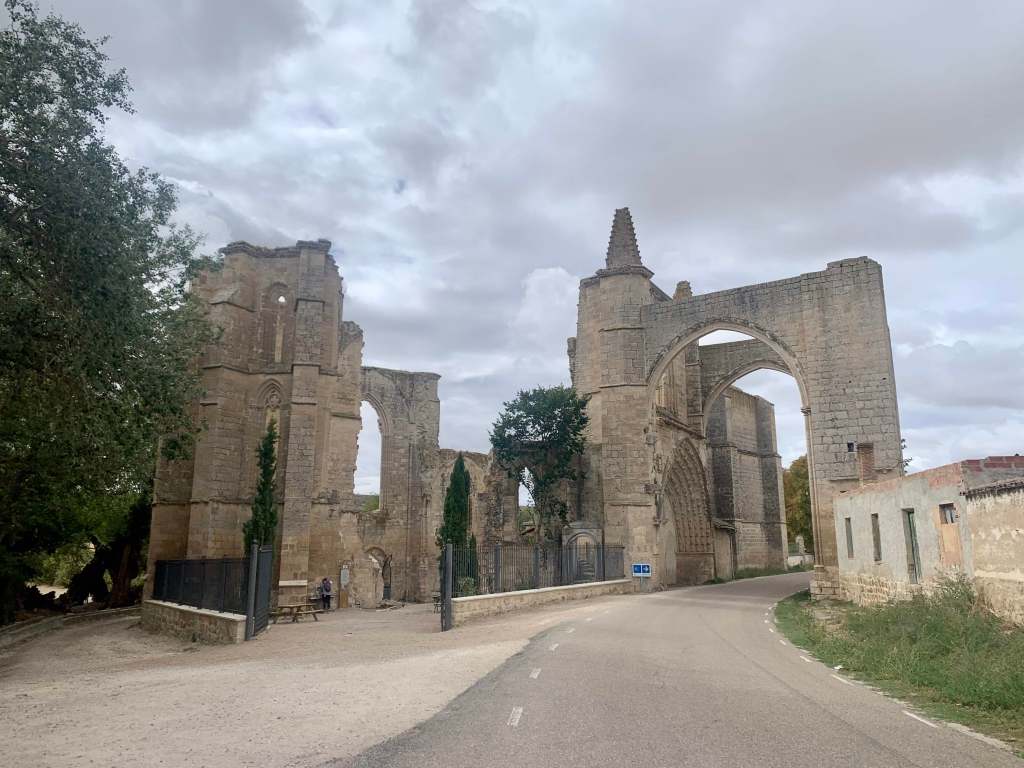
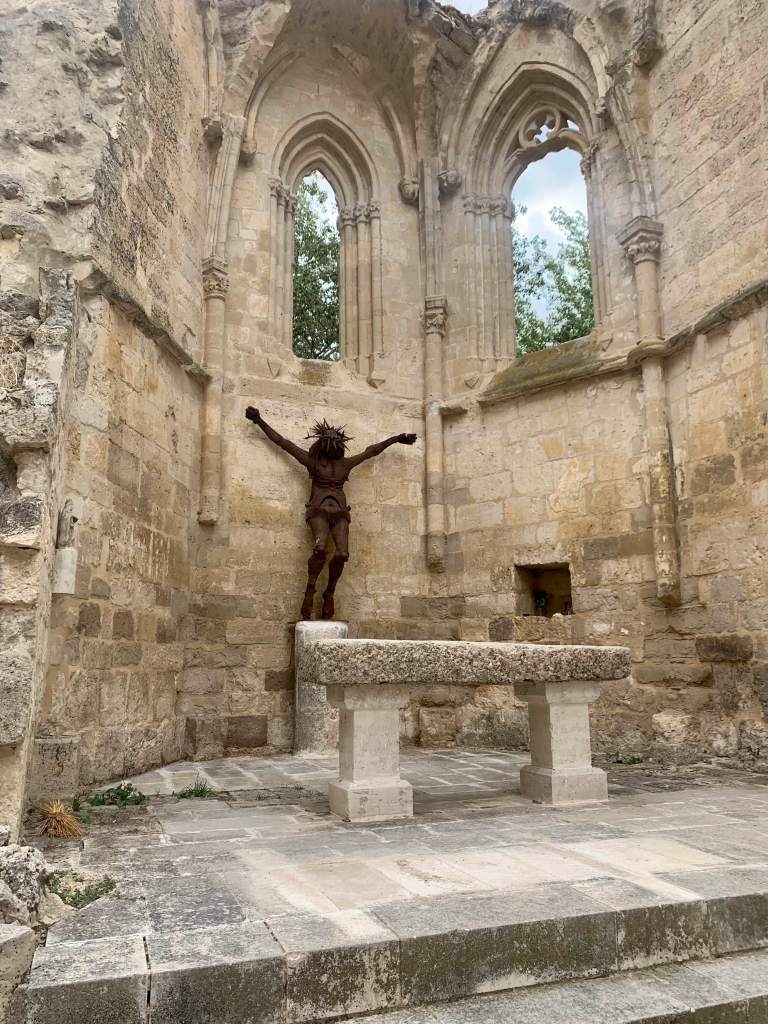
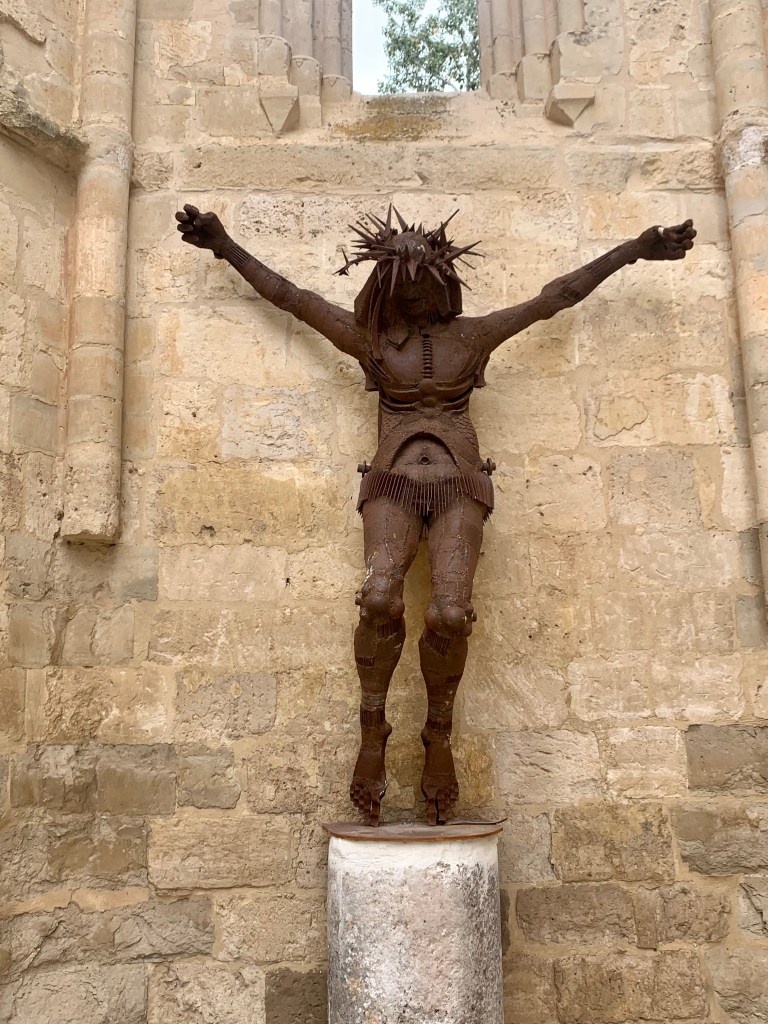
Near the end of the day we passed through the ruins of a church/convent that used to service perigrinos.
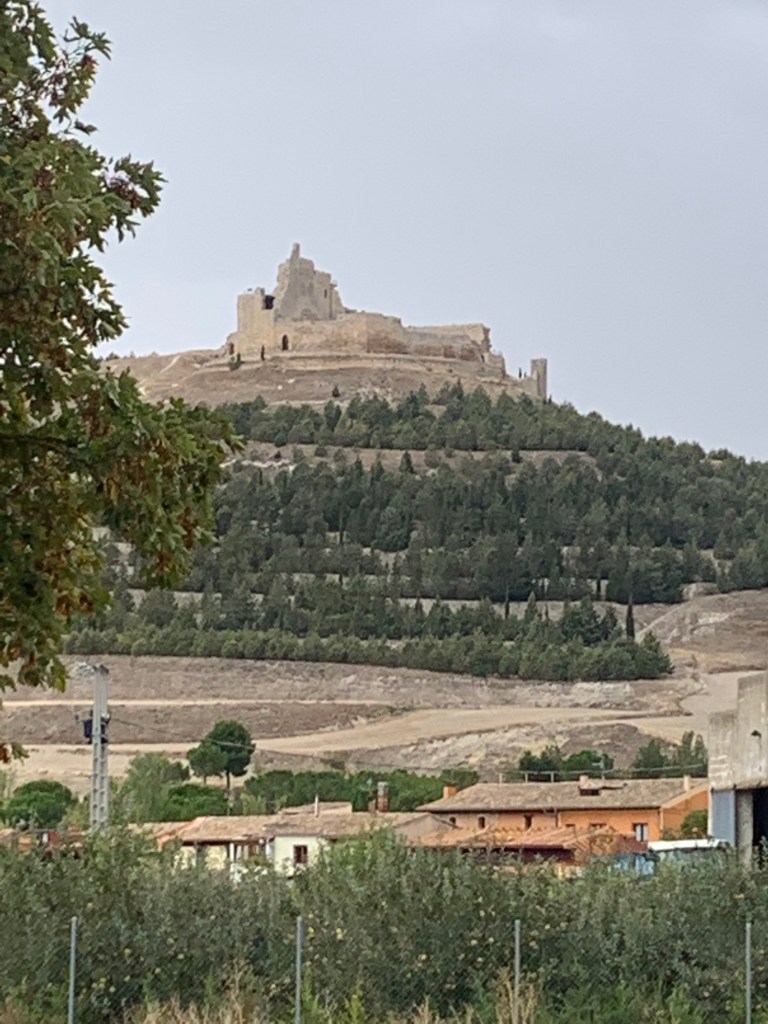
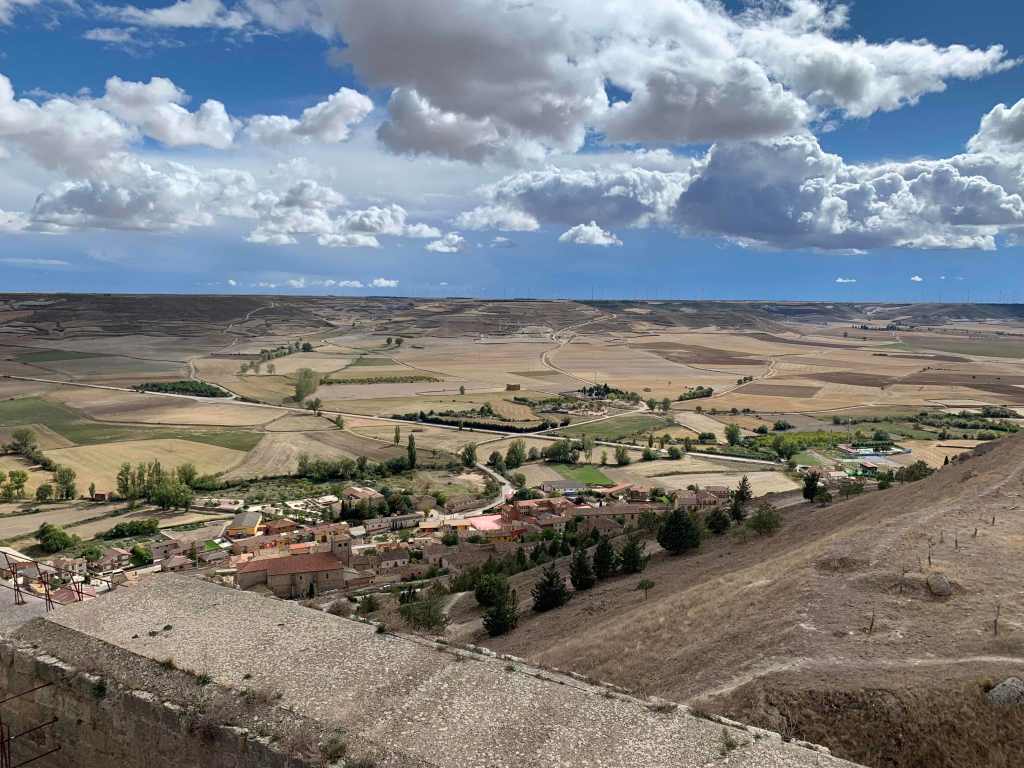
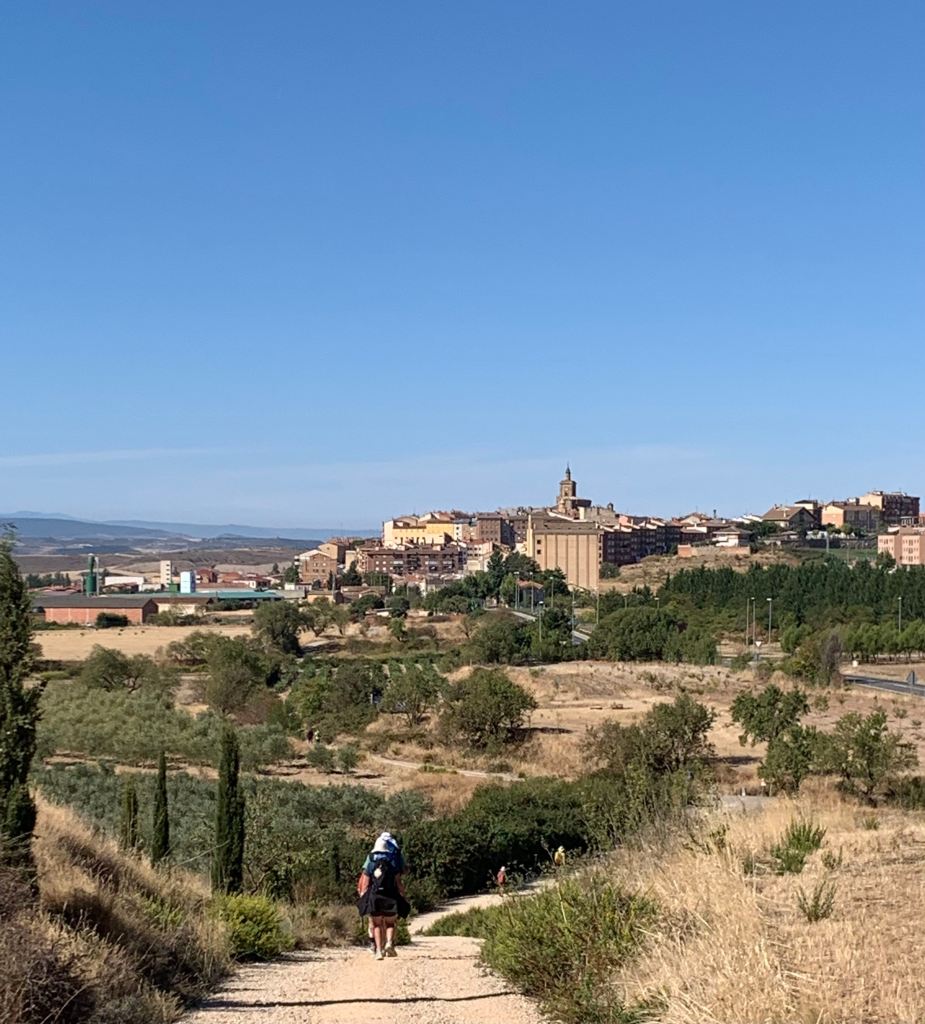
And, after 13 miles or so our destination, Castrojeriz came into view. The town is known for the ruins of the castle on the hill.
Our home for the night. And we had an escort – all the way to our hotel.
After getting cleaned up we decided to hike up the castle.
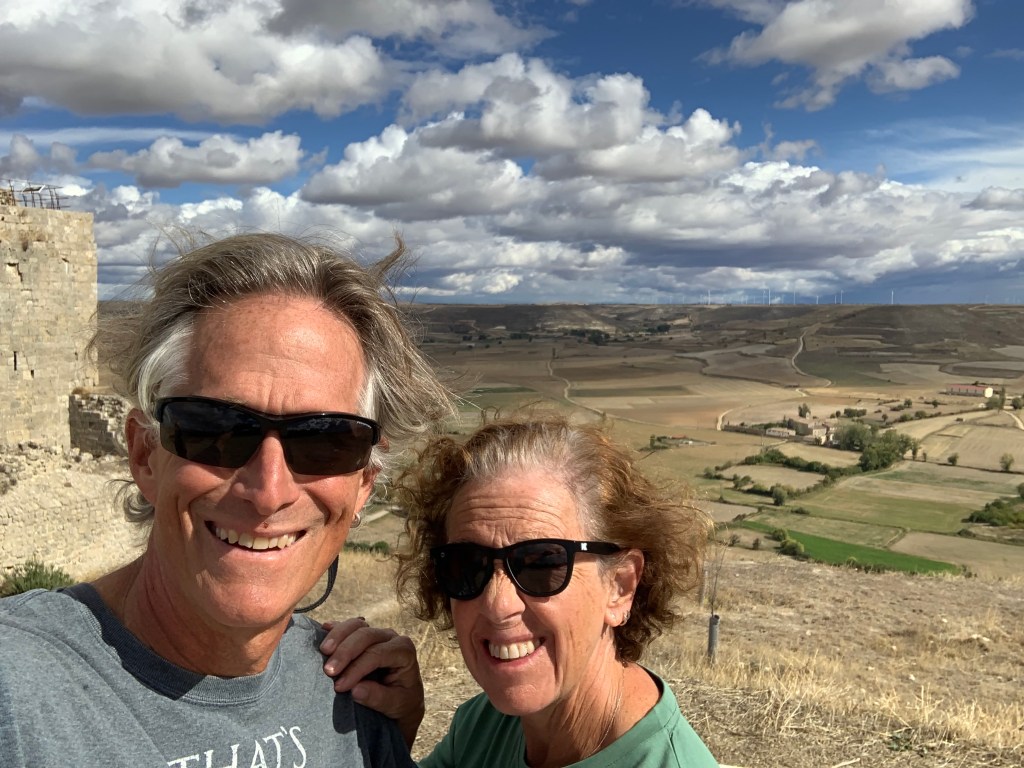
The castle was built originally in the 9th century. That’s right, the 800’s. It was expanded over the centuries and was destroyed in the 1755 Lisbon earthquake. The views from the top were stunning.
Day 9 (Sep 24): Nájera to Santa Domingo de la Calzada, 21.4 Km, 211 Km (Total)
After yesterday’s nearly 30Km jaunt, today was a welcome change at just a bit over 13 miles. The next few days will be relatively short (15 miles or less) so we can recover a bit.
Walking toward the rain…
And we are headed to a town named after a big patron of the Camino, Santo Domingo.
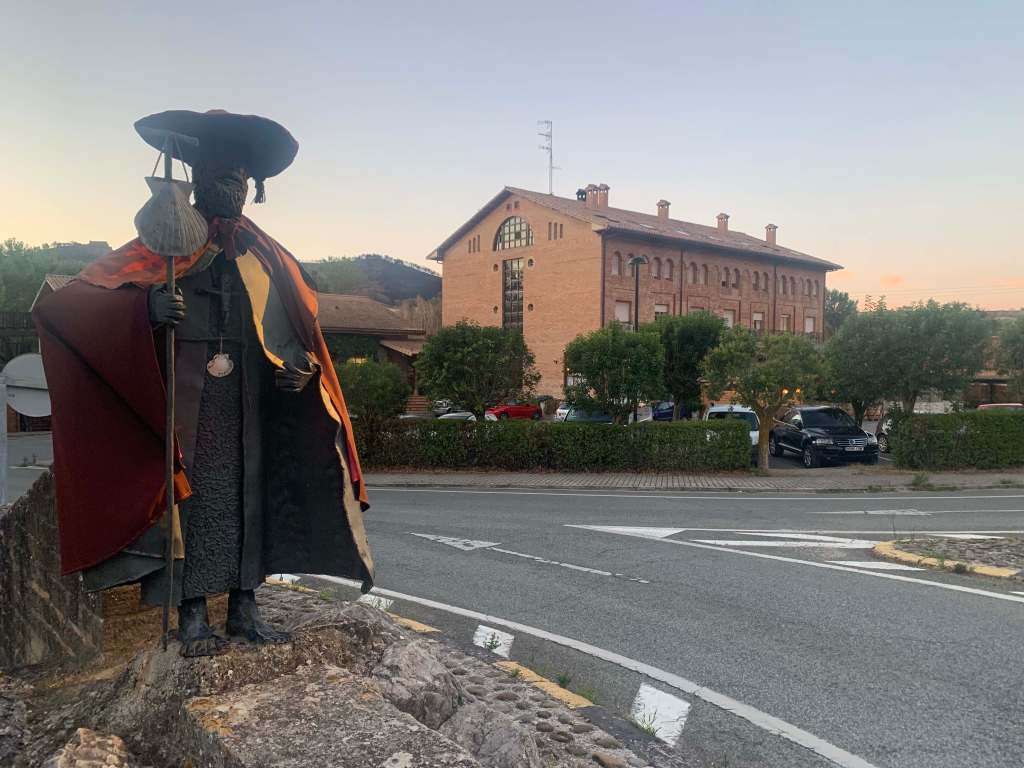
A monument to Santo Domingo
Between breaks in the rain we had views of rolling farmland (mostly grapes).
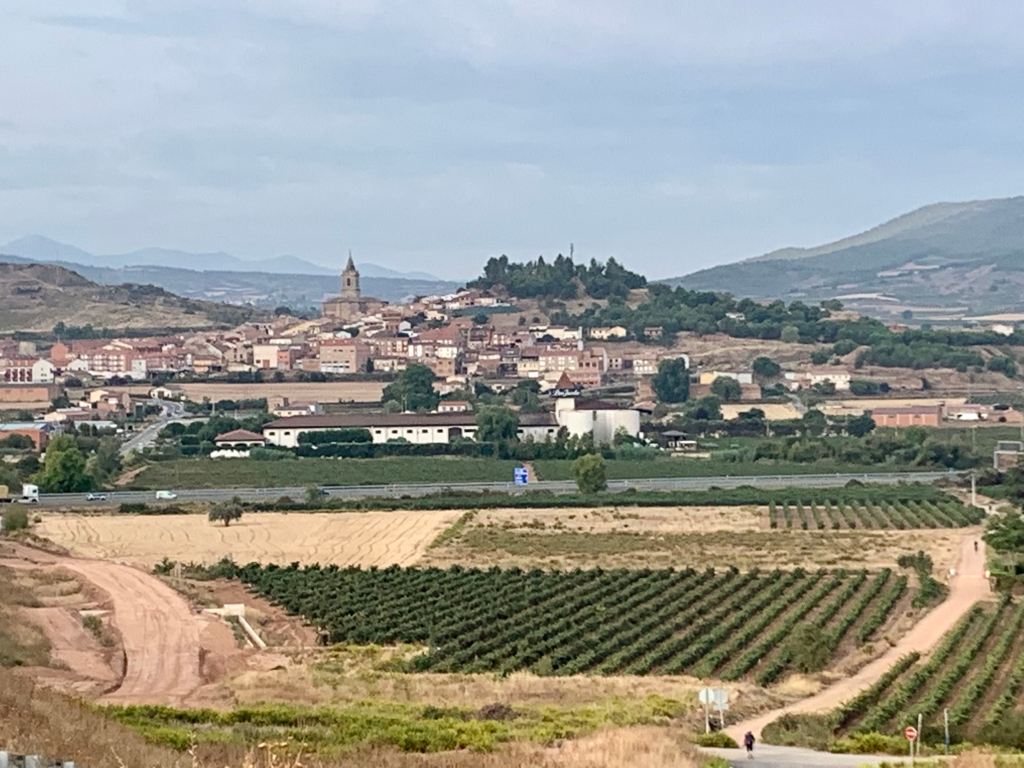
Vineyards on the way to Santo Domingo
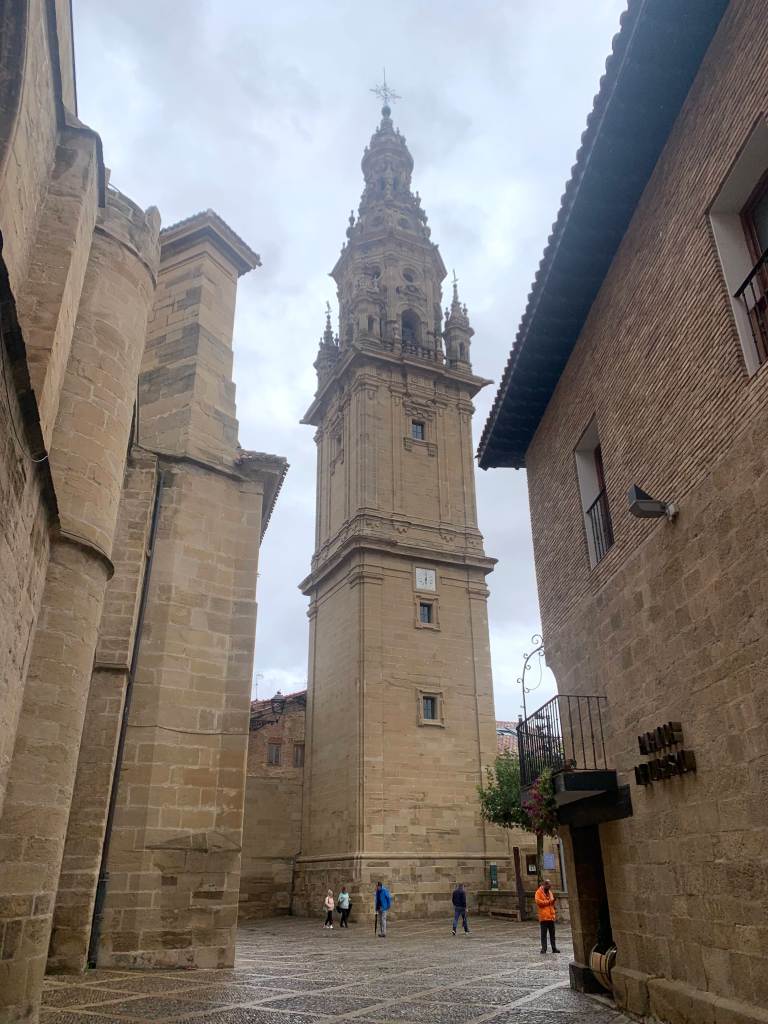
We arrived at our hotel just before the rain really started to come down. After it stopped we toured the cathedral and the clock tower.
View from the clock tower
Day 10 (Sep 25): Santa Domingo to Belorado, 21.4 Km, 233 Km (Total)
Roberta and I are both sick. Some kind of head cold thing that is hitting Roberta a bit harder than me so she elected to skip this stage and taxi to Belorado. I decided to walk and think it was the right decision as I slowly felt better as the day wore on.
Typical view on day 10
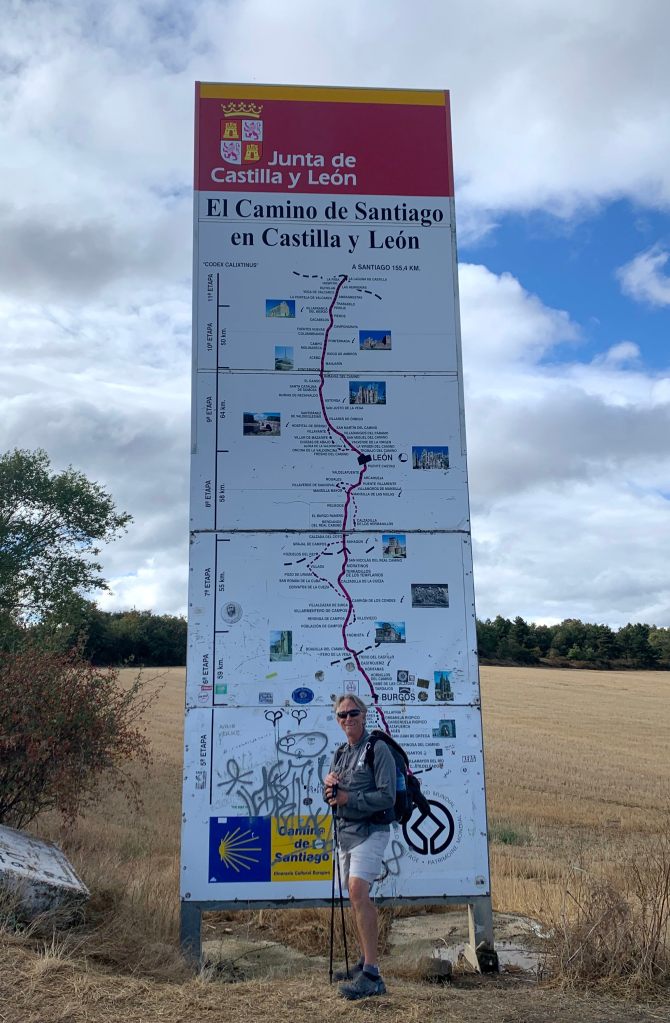
And we left the autonomous region of La Rojia and entered Castilla y León.
Entering Castilla y León
We stopped for lunch at an albergue in Redecilla del Camino that had no menus. They were serving only “omelette sandwiches”. When we tried to pay, the lady said there were no prices, you just pay what you can or want to.
A 12th century baptismal font in the Iglesia Nuestra Senora in Rececilla
We arrived in Belorado around 2:30 to find Roberta comfortably recovering in our hotel.
We walked around a bit after getting cleaned up and discovered at least one other American had preceded us…
Martin who?
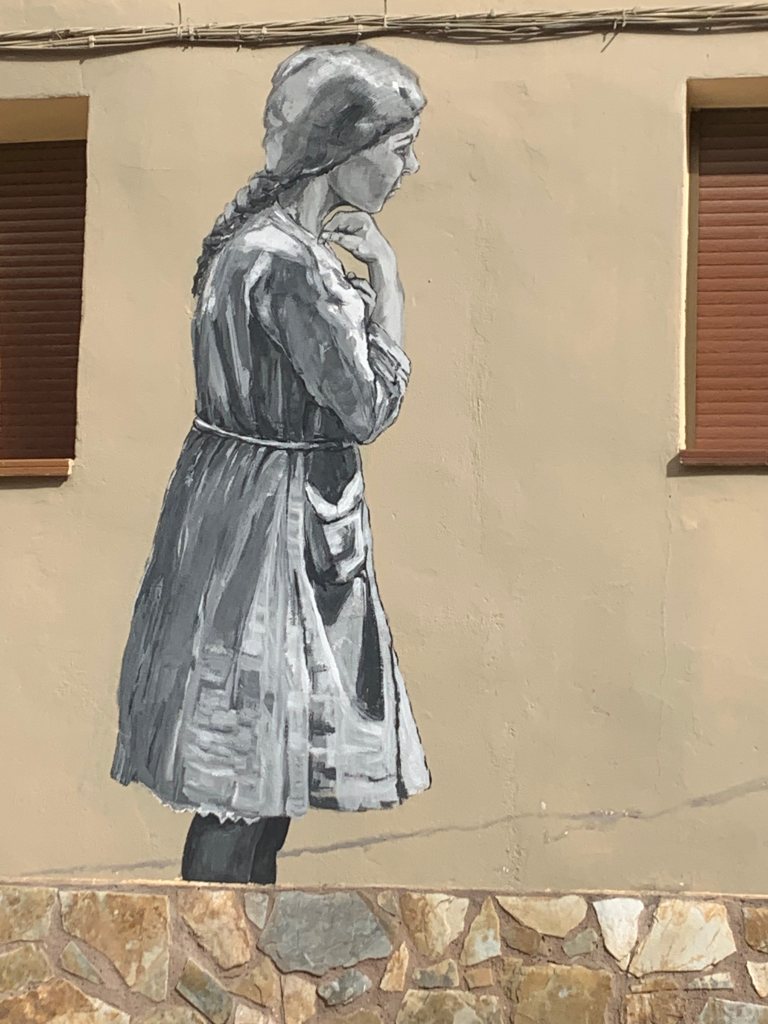
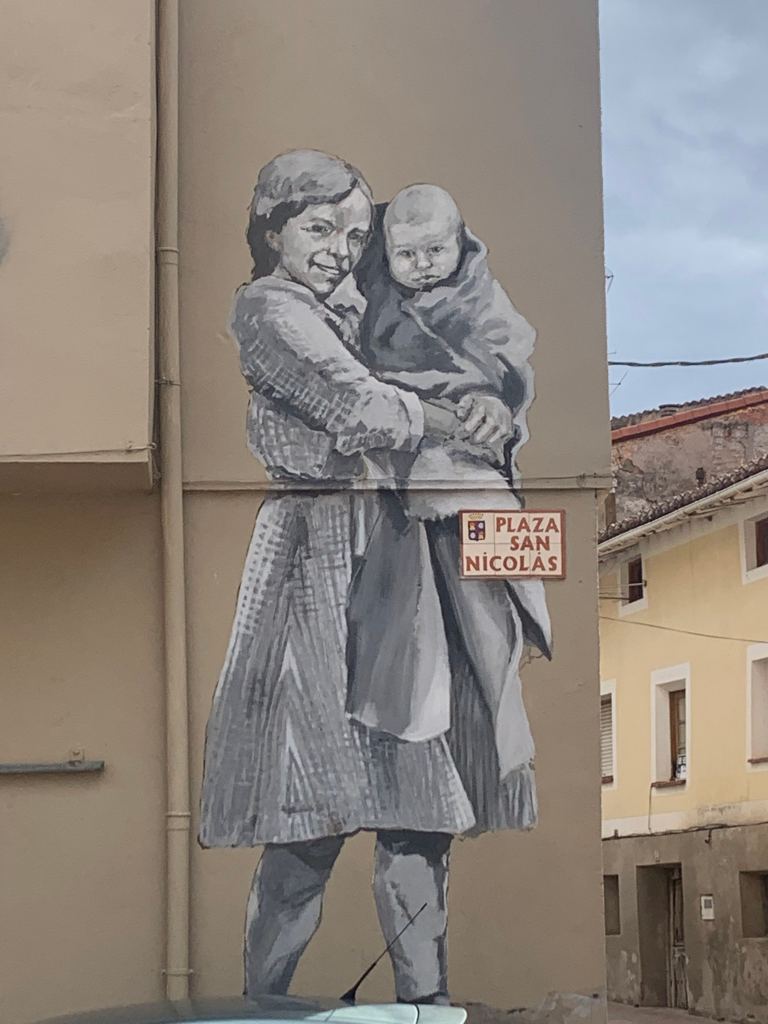
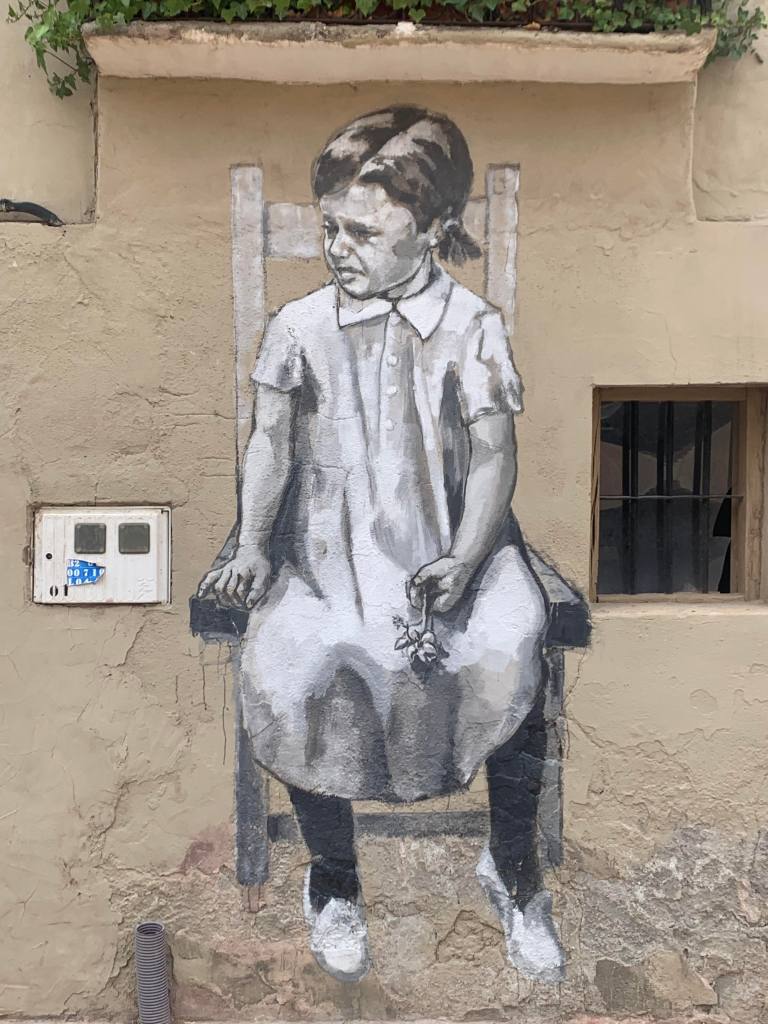
… and discovered some very nice wall art.
Day 11 (Sep 26): Belorado to San Juan de Ortega, 24 Km, 257 Km
Rain threatened today but never materialized so we had another nice (but overcast) day with very mild weather (40’s in the morning rising to 60’s in the afternoon). And we are all together again as Roberta is feeling up to hiking!
Camino Art… … and more Camino Art.
We spent pretty much all morning climbing gently (with a steep section near the end) from 2500′ to over 3700′ before slowly descending to the tiny town of San Juan de Ortega. San Juan was a disciple of Santo Domingo and also dedicated most of his life to the Camino. He built the church and hostel here to protect peregrinos from bandits.
Iglesia de San Juan de Ortega
And we passed another sobering reminder of the Spanish Civil War.
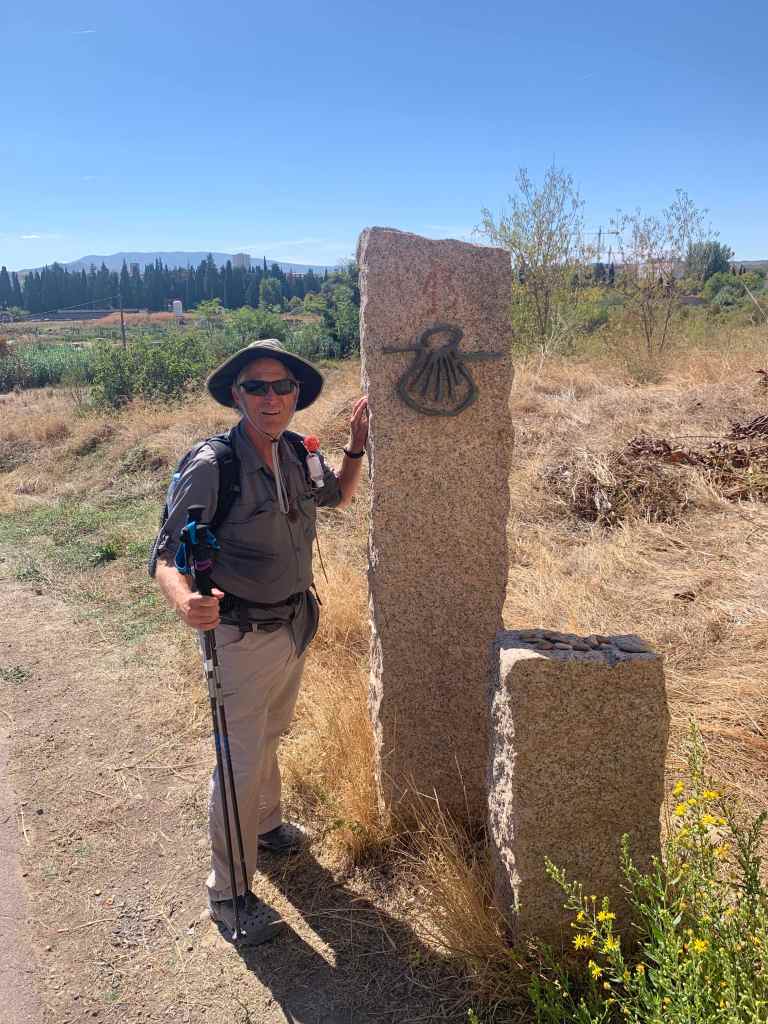
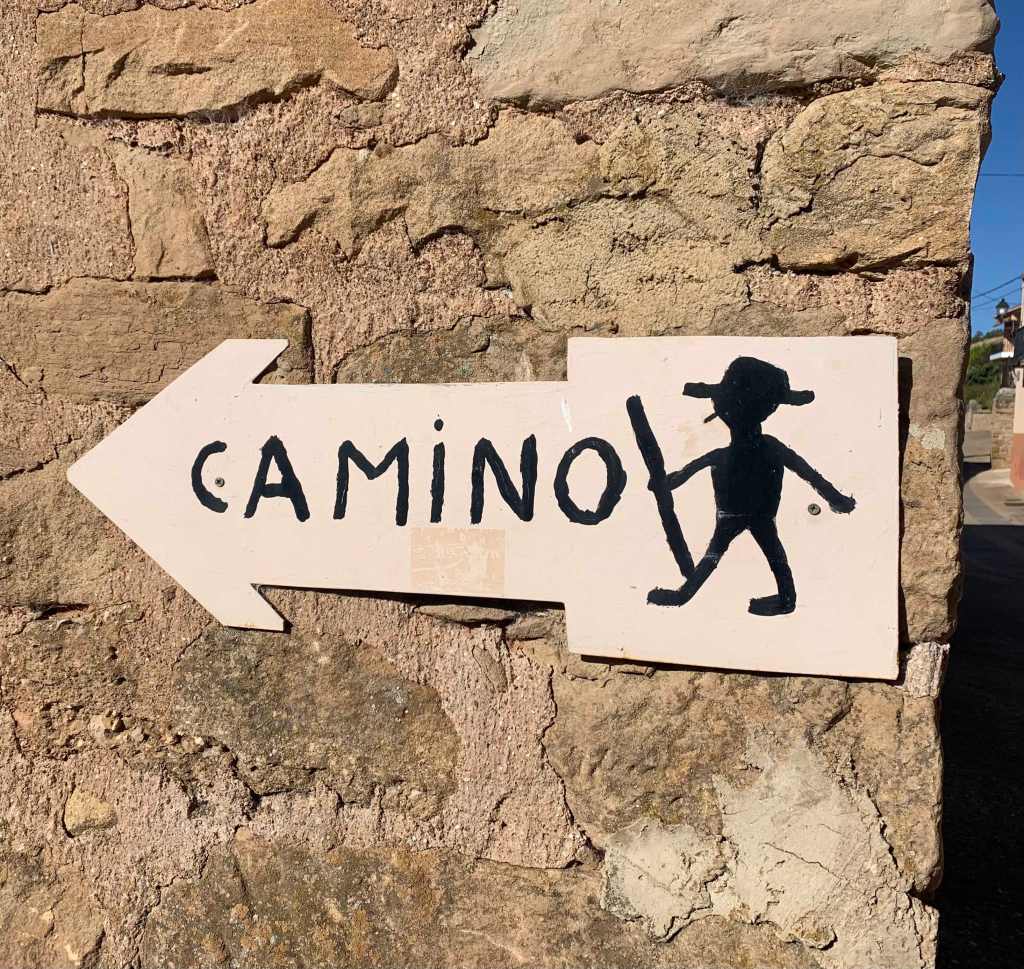
And of course we followed the numerous and varied Camino markers.
Day 12 (Sep 27): San Juan de Ortega to Burgos, 25.9 Km, 283 Km
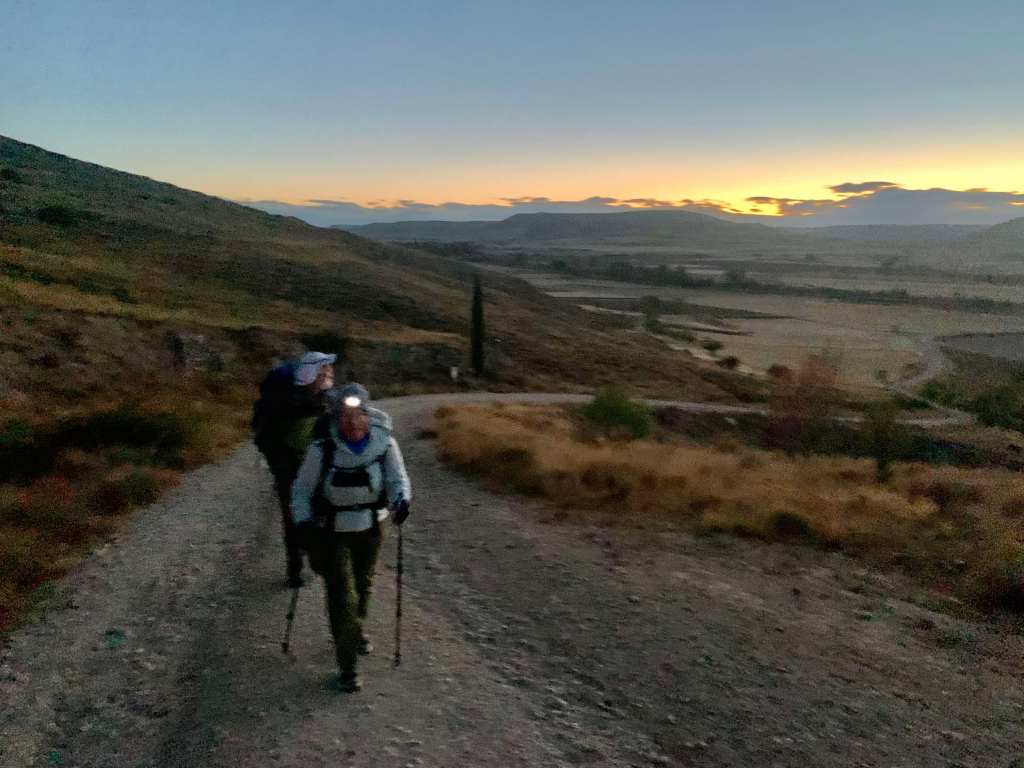
A bit longer day, 16 miles, to get to the big city of Burgos which is supposed to have an amazing cathedral. So we started before sunrise…
An early start!
The sun rose in about an hour just as we exited a forest. We passed Atapuerca which has a famous archaeological site with evidence of some of the oldest inhabitants of Europe
Day 12 Selfie
We got our first view of Burgos with still 6 miles to go. The last 4 miles were through the outskirts of the city but along a river so very nice.
Our first view of Burgos
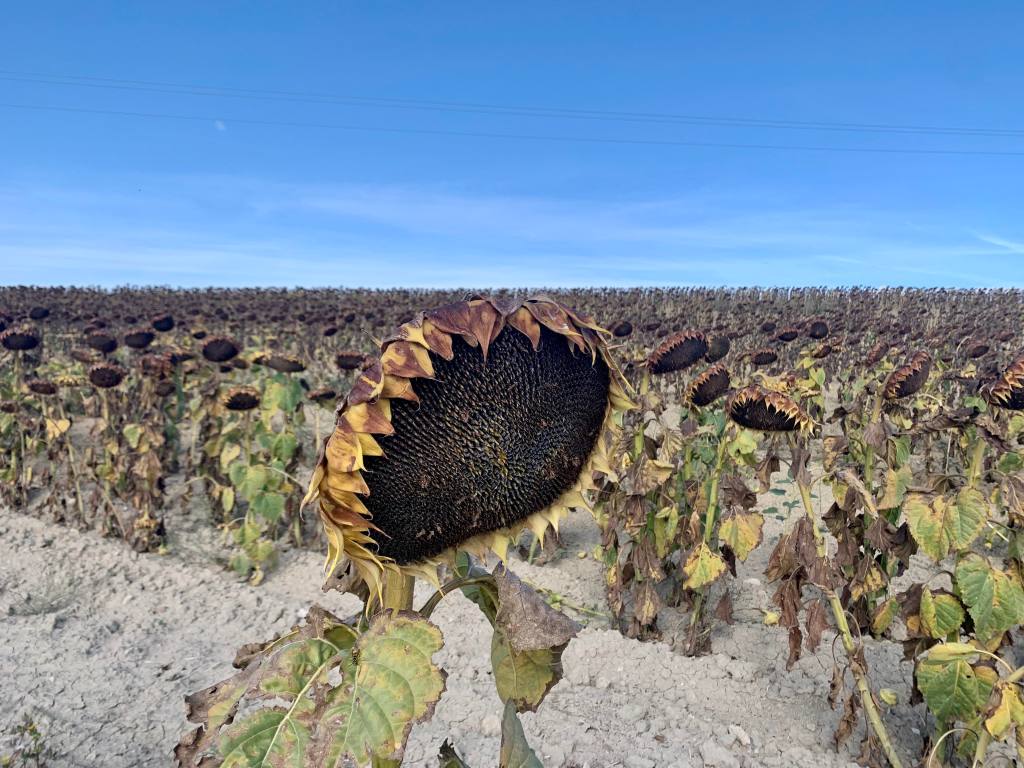
And what is the deal with the sunflowers? We’ve seen literally thousands of sunflowers in fields that appear to be dead but not harvested.
Weird field of dead sunflowers.
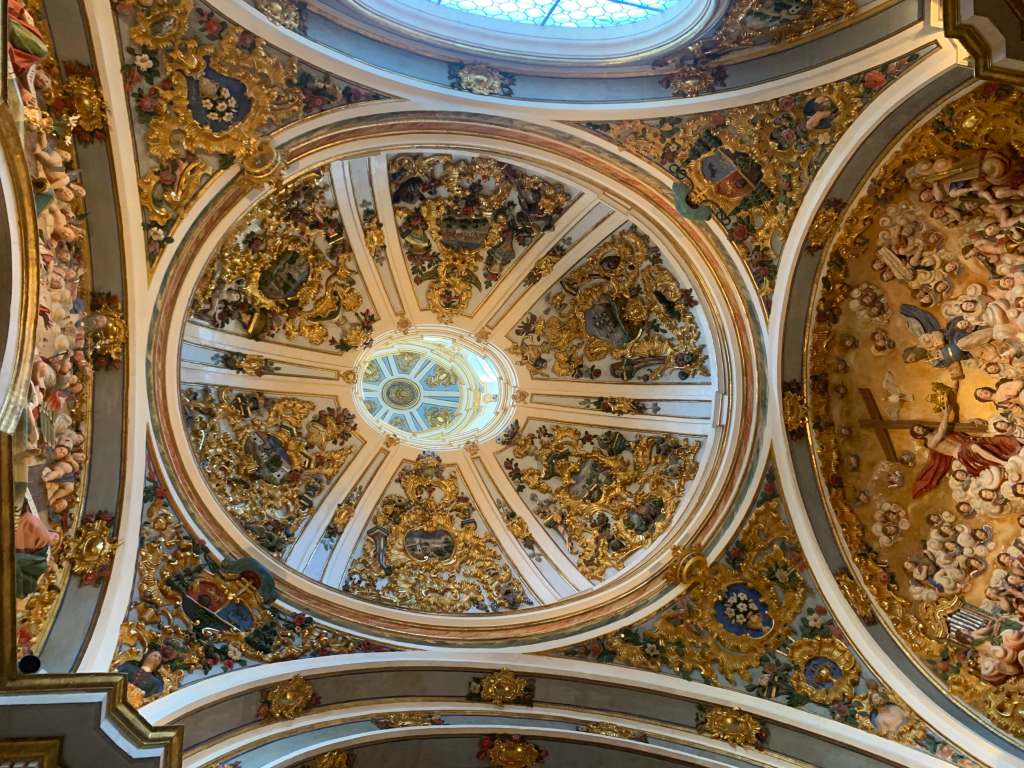
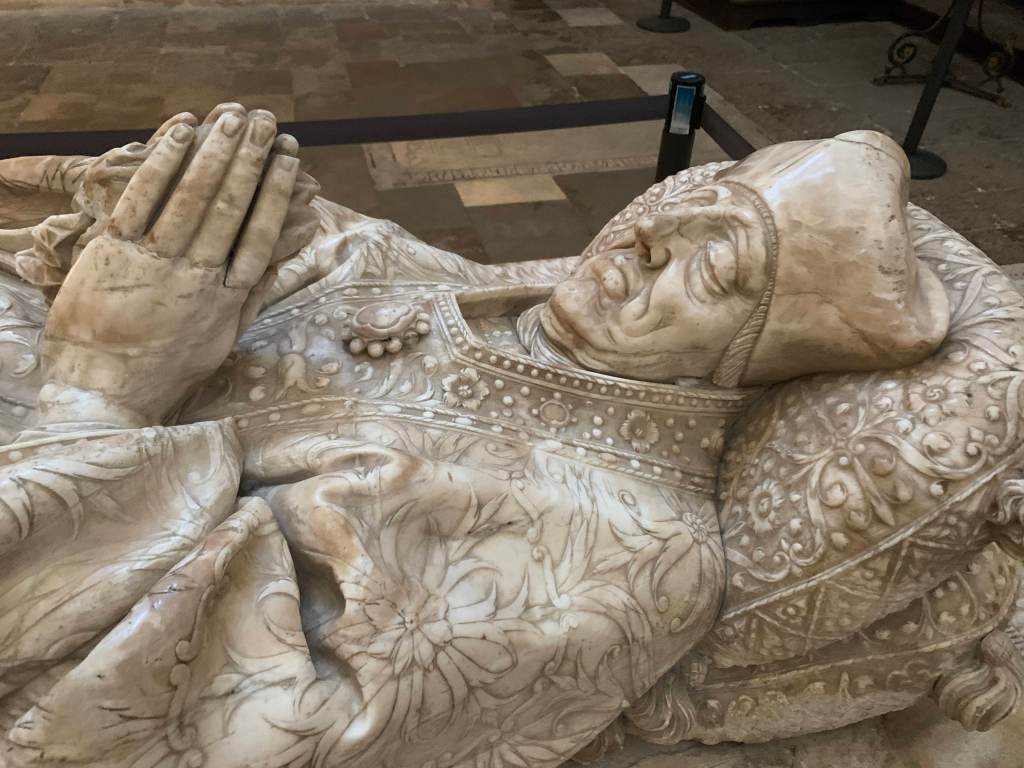
Burgos is a pretty big city (>100,000) and is famous for their cathedral which is truly amazing. We toured the cathedral before dinner.
Burgos Cathedral
Day 13 (Sep 28): Burgos to Hornillos del Camino, 21 Km, 304 Km
We passed the 300 KM mark!!! And, near the end of the day, we climbed up onto the Meseta . A pretty easy day but it took us forever (it seemed) to get out of Burgos. We did have a lovely view of the west side of the cathedral as we left.
Final view of the Burgos Cathedral (west side)
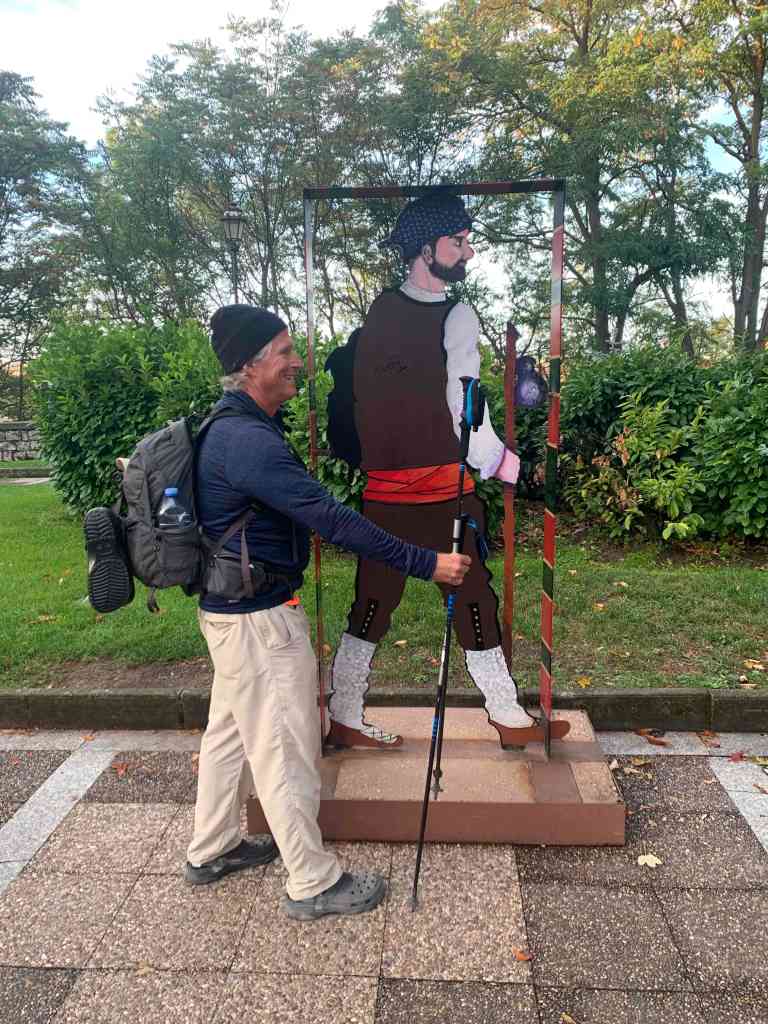
And they had these metal pilgrims showing the way…
Jason and friend.
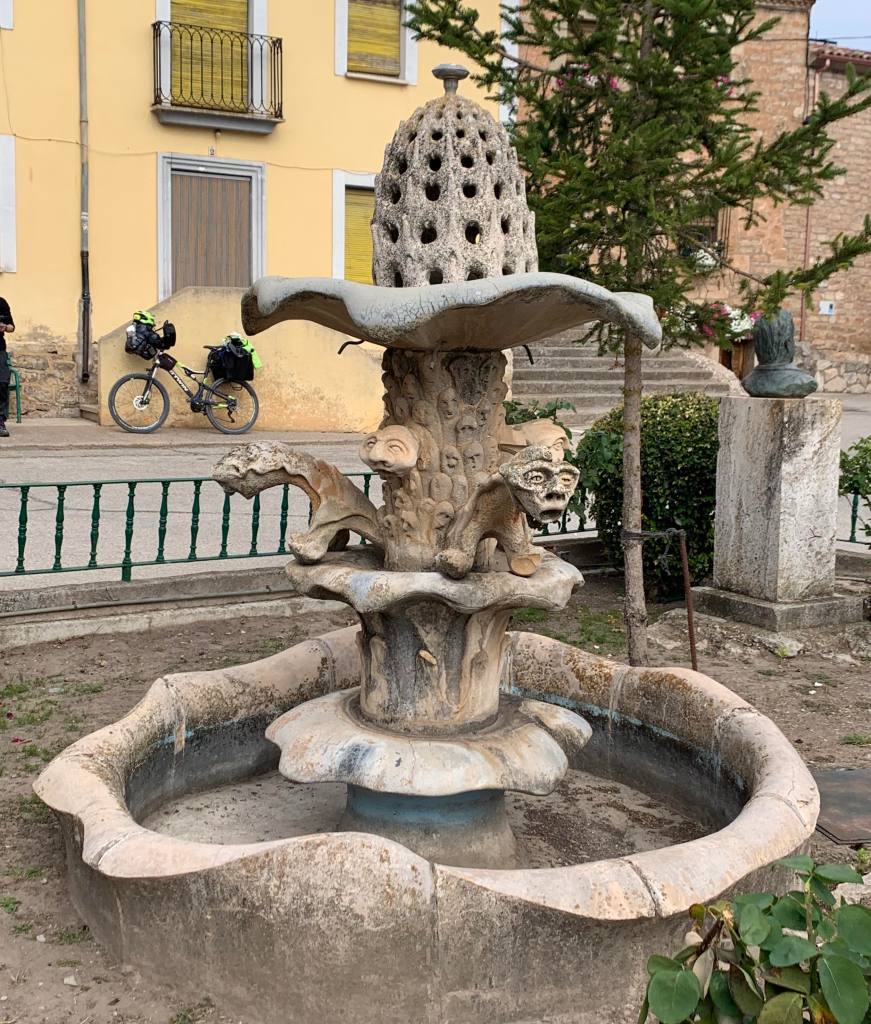
Roberta: “This is what you get when you drop acid and decide to sculpt…”
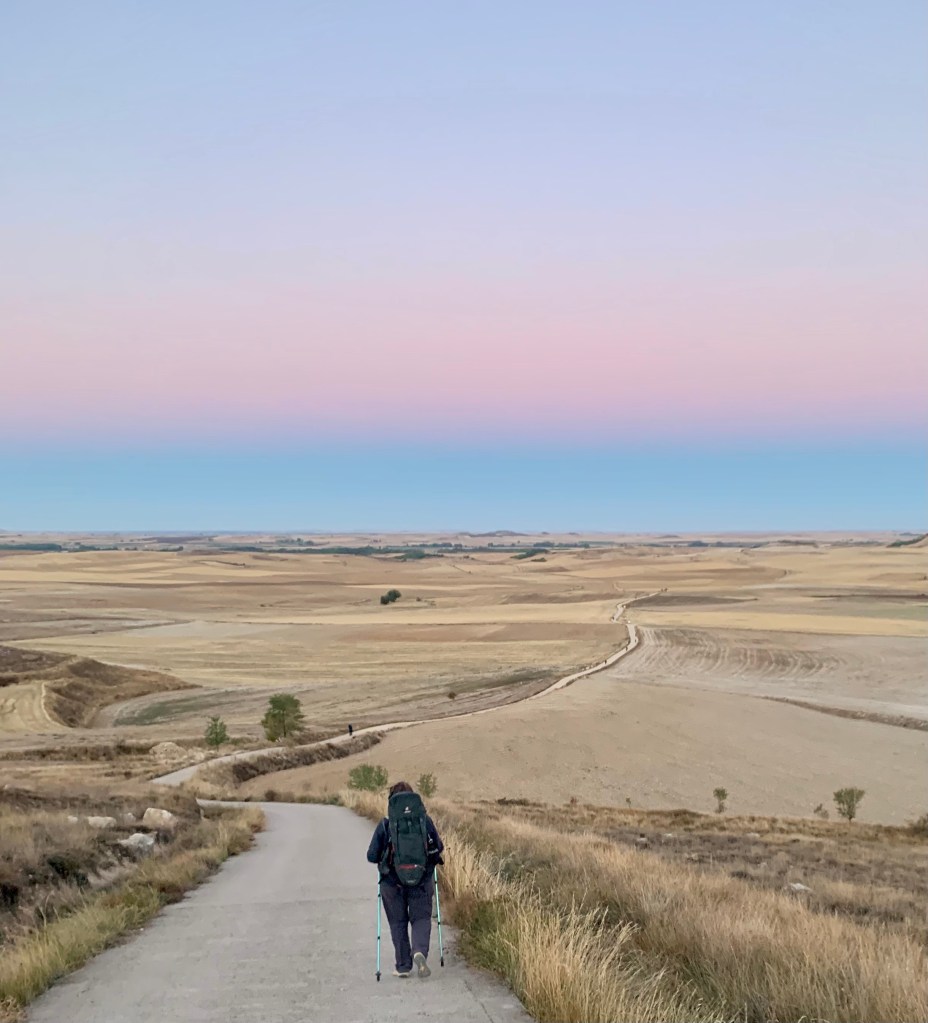
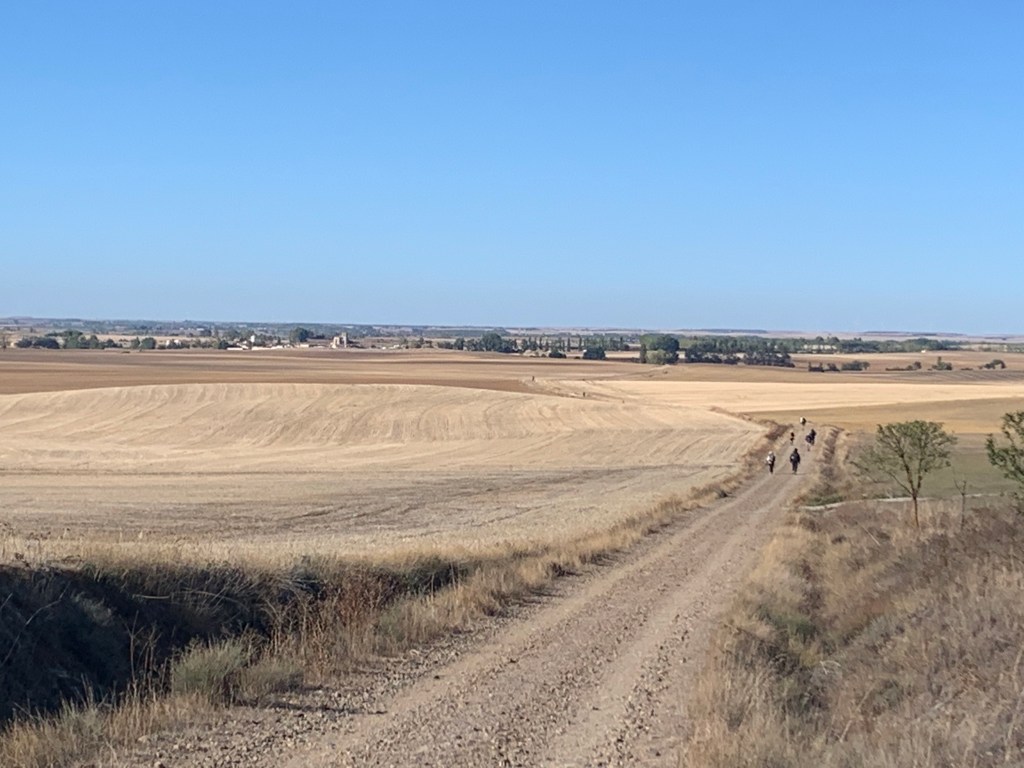
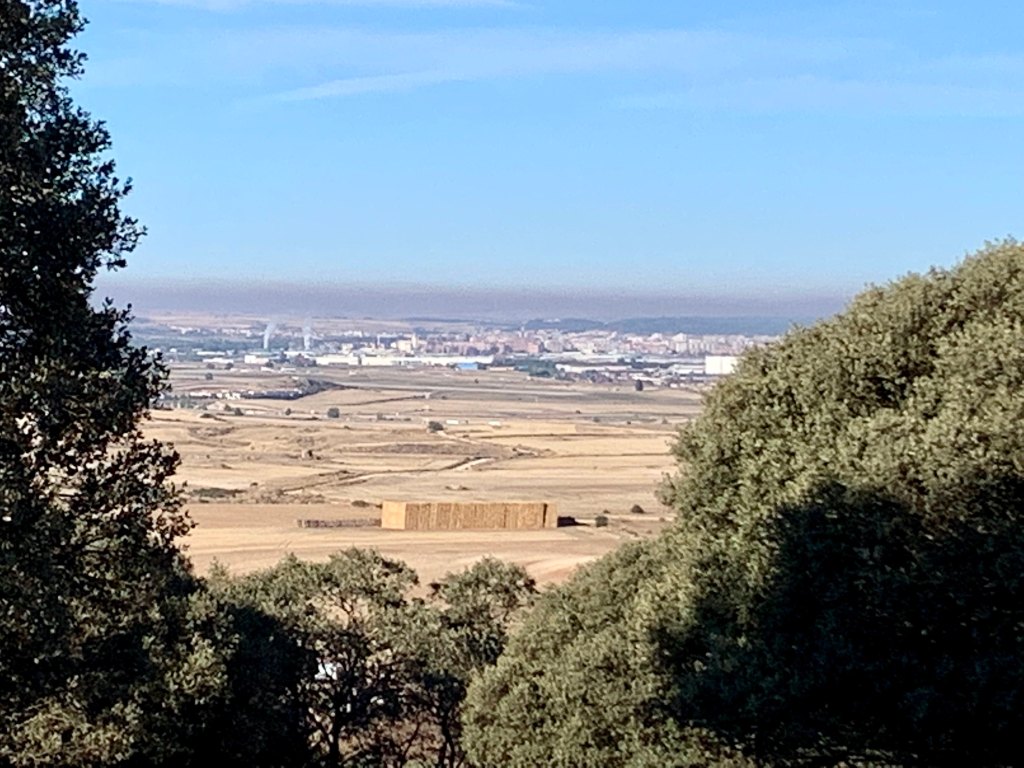
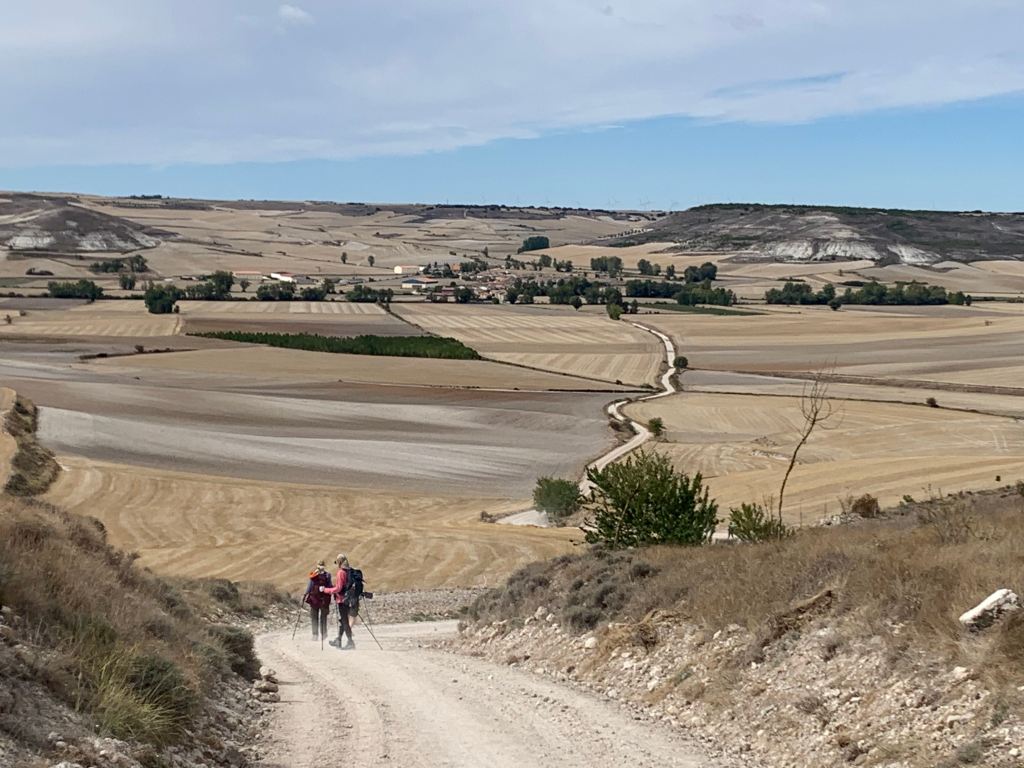
We finally climbed up onto the Meseta near the end of the day. The Meseta is a plain (rolling hills) of farmland and few features.
First view on the Meseta
And then down into a small valley and Hornillos del Camino,
View of Hornillos del Camino , other peregrinos and our home for the night.
After four relatively short (20-24 km) days we had our first long (~30KM or longer) days on the Camino in quick succession.
Day 7 (Sep 22): Los Arcos to Logroño, 27.8 Km, 160.8 Km (Total)
We elected to skip the hotel breakfast to get a jump on the day. We had our headlamps on as we headed out of town as the sun slowly rose behind us. It was cool (40’s) but lovely.
Daily Selfie
Everyone felt good and we had 11 miles down before lunch. It was a little cooler today which helps.
Walking toward lunch in VianaA pilgrim shrine of sorts.
The last few miles in the heat are always the hardest but, with our early start, we managed to stumble into Logroño around 3:30 (though Jim and Leigh Ann had to hike another 10 minutes to their hotel). And we entered a new autonomous region today (La Rioja) which has different trail markers.
Trial markers near Lagroño
Unfortunately the cathedral in Logroño was not open but we managed to find a place that served wine just in front so we had a nice view.
The Concatredal de Santa Maria de la Redonda in Legroño
Day 8 (Sep 23): Logroño to Najero, 29.4 Km, 190 Km (Total)
Another early start with headlamps as we headed out of Logroño in the dark. We grabbed a coffee and a roll at a pandaria as we headed out of town.
People in the towns are quick to point the way when you wander off the Camino and lots of people say “Buen Camino!” as you pass.
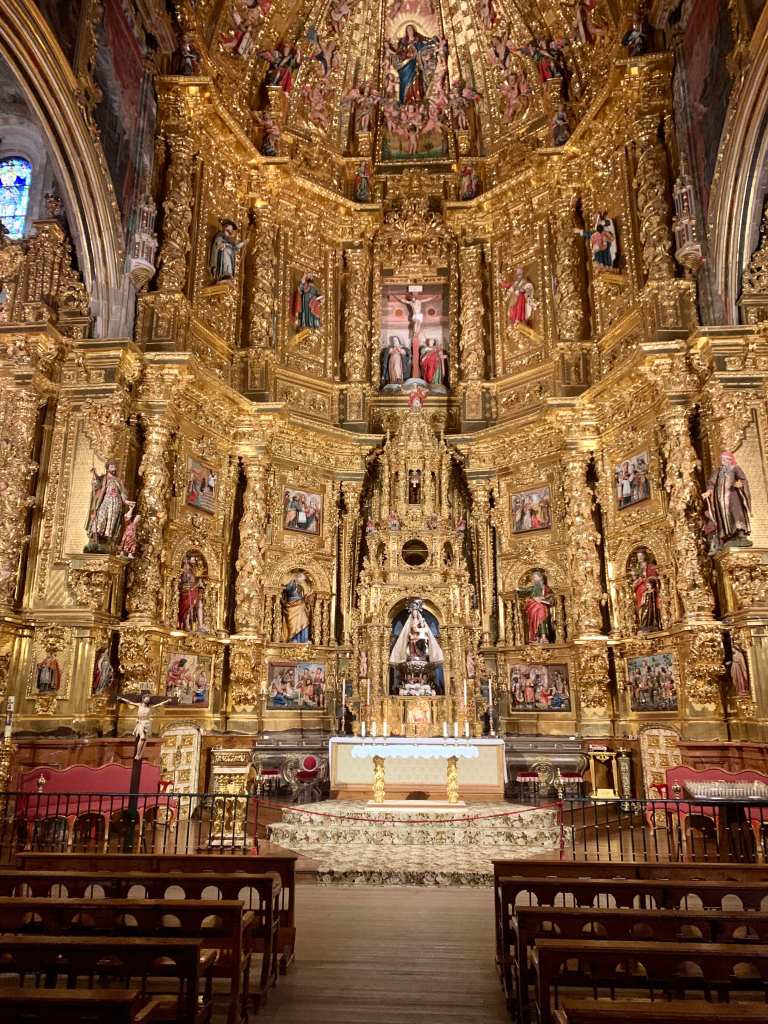
The altar in the Parroquia Santa Maria de la Asuncion in Navarette
We stopped in Navarette for a coffee and dropped into the church which had an amazing altar. I also got a pilgrim stamp here. Then on to Ventosa and lunch.
Heading in Ventosa
Our system on long days of walking 5-6 miles to coffee and then another 5-6 miles to lunch seems to work well. After lunch there is only another 2-3 hours of walking.
And the next few days promise to be both cooler and shorter which will be a nice change.
Okay, the rain in Spain does not mainly fall on the plain. Either that or we are not near any plains. Our first six days in Spain have been sunny and warm. The days usually start in the high 40’s and slowly ramp up to the low 80’s by mid-afternoon.
Day 2: Roncevalles to Zubri, 21.2 Km (Day), 45.9 Km (Total)
Our first Camino hotel was nice – private rooms and bathrooms – so we are very happy. Everyone is a bit sore from yesterdays big climb but we are all moving well as we head out after breakfast.
Intrepid hiker ready for the day!
This is a short day (as are the next three or four) which is nice since there are no rest days on our schedule.
View on day 2
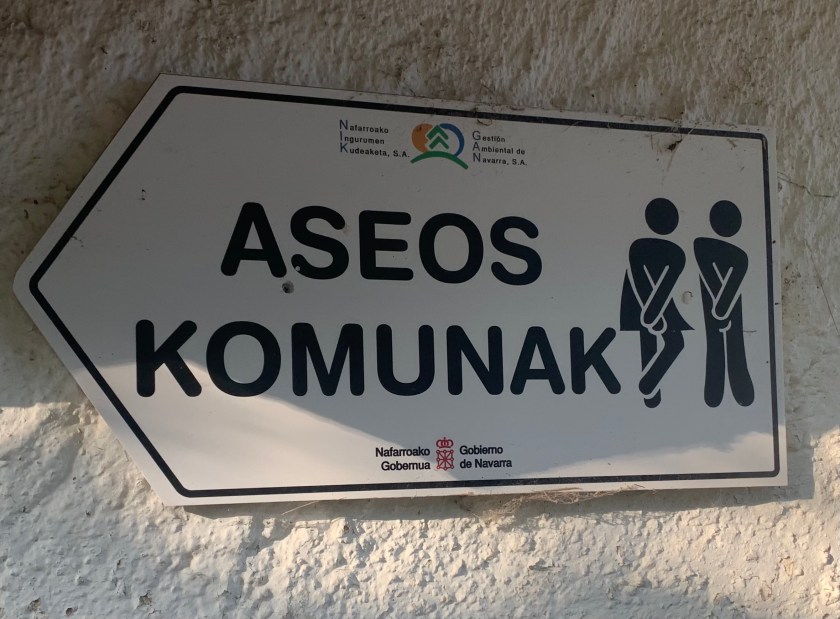
We had nice views today but nothing like yesterday’s stunning vistas. And we have noticed that a lot of the signs appear to be in Basque instead of Spanish.
Basque Sign (Common Toilets)
And we ended our day soaking our feet in the Rio Arga.
Rio Arga
Day 3: Zubri to Pamplona, 20.7 Km (Day), 66.6 Km (Total) 66.6
Another pretty easy day as we get our bodies to slowly adjust to a life on the trail (admittedly a pretty plush life with hotels every night).
Jim attempts to move a wall. Happy hikers!
Today’s 13 mile hike ended in the city of Pamplona. We took the advice of a gentleman we met on the trail who recommended the “River Route” into town rather than the standard route. He was right – it was shady and lovely as we followed the Rio Arga into town.
A brief stop on the way into Pamplona
Pamplona is a big city and we only got to see a little bit of it but the Pamplona Cathedral was very near our hotel so we visited it.
Day 4: Pamplona to Puenta la Reina, 23.3 Km , 89.9 Km (Total)
Today has our first climb since coming over the Pyrenees on day 1. Out of Pamplona we slowly ascend to Alto del Perdon (750m), a climb of about 1000 feet over 12 km or so.
Hiking out of Pamplona
Another lovely day that started cool (48 degrees) and slowly warmed up to the low 80’s.
Near the top – Pamplona in the background.At the top!
The rest of the day is a gentle descent to our hotel in Puenta la Reina.
Our home for the night.
Day 5: Puenta la Reina to Estella, 21.9 Km , 111.8 Km (Total)
Big day as we past the first 100 km mark. Another warm day with no big climbs.
100M and still smiling!
We walk through rolling farmland punctuated but pretty little medieval towns.
Pilgrim art
And the churches! We see churches all day. Today we passed a church that held the oldest christian iconography in Spain (it has since been removed to a museum).
Interior of a church built in the 10th century.
We pass clusters of hikers and there are usually several small groups in sight as we hike but it never feels crowded.
Just a couple of hikers.
We finally arrived in Estella but our hotel was 1.5 km from the Camino so we had a nice stroll through town.
Impressive building in Estella
Day 6: Estella to Los Arcos, 21.3 Km , 133.1 Km (Total)
Our last easy (14 miles or so) for a while so we enjoyed it!
Another lovely day…
Los Arcos is named in honor of a battle won by the town’s archers. Pretty little town with a lovely church.
Church in Los Arcos (Iglesias de Santa Maria)
Tomorrow is our first 17+ mile day so we plan to start early, before sunrise, to beat the heat of the late afternoon.
Our good friends Emerson and Linda dropped us off at our hotel in Saint-Jean-Pied-de-Port on September 15. We had spent the last four days slowly working our way from our marina in Saint-Jean-de-Losne (there are a ton of “Saint-Jean-the whatevers” in France) to our starting point. Our last stop was Lourdes where I scored some water from the Grotto of Massabielle. Figured it couldn’t hurt.
Two Pilgrims at the Porte Saint Jacques
After a late lunch with Emerson and Linda, we waved goodbye and checked into our hotel. After finding our hiking partners we picked up our information packet and headed to the Bureau des Pelerins to get the first stamp in our Pilgrims Passport.
Jim waiting for his stampFirst stamp!
Day 1 – Over the Pyrenees: Saint-Jean to Roncevalles
In the morning, waiting for our hiking buddies to join us, I watch as pilgrims exited the hotel and then turned around and headed back in to put on rain gear. Our first day started at about 8:30 in a light rain that lasted most of the morning. Today was one of our toughest as the first 13 miles or so are all uphill. Having a 4,000′ plus first day is daunting but we were all in high spirits when we started.
Pilgrims!
As the day progressed we finally got a break in the clouds and started to get some nice views.
View near the top
We finally reached the top of the pass about 2:00 PM after 6 hours and 13 miles of up.
At the top!Day 1 of our Camino
After another couple of hours we finally stumbled into Roncevalles and a lovely little hotel with …. beer!
Tired, thirsty pilgrim.
The first day was tough but we all felt good and were excited about pilgriming on. Only 760 km, give or take, to go.
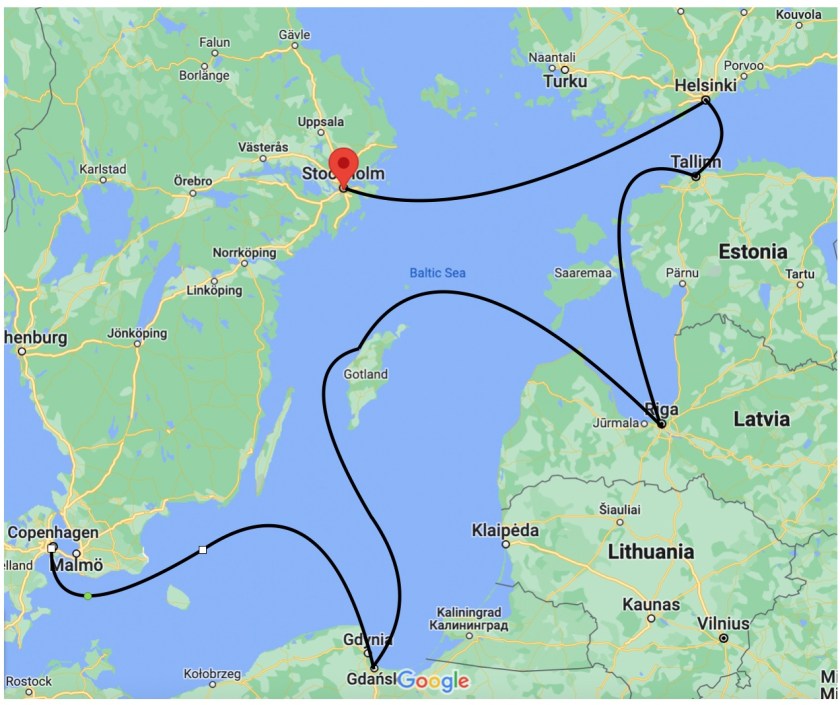
So, where to folks living on a canal boat go when they want a little vacation? On a cruise! A much bigger boat of course. Our 40th anniversary Baltic cruise that was delayed twice by the pandemic finally happened (minus St Petersburg unfortunately).
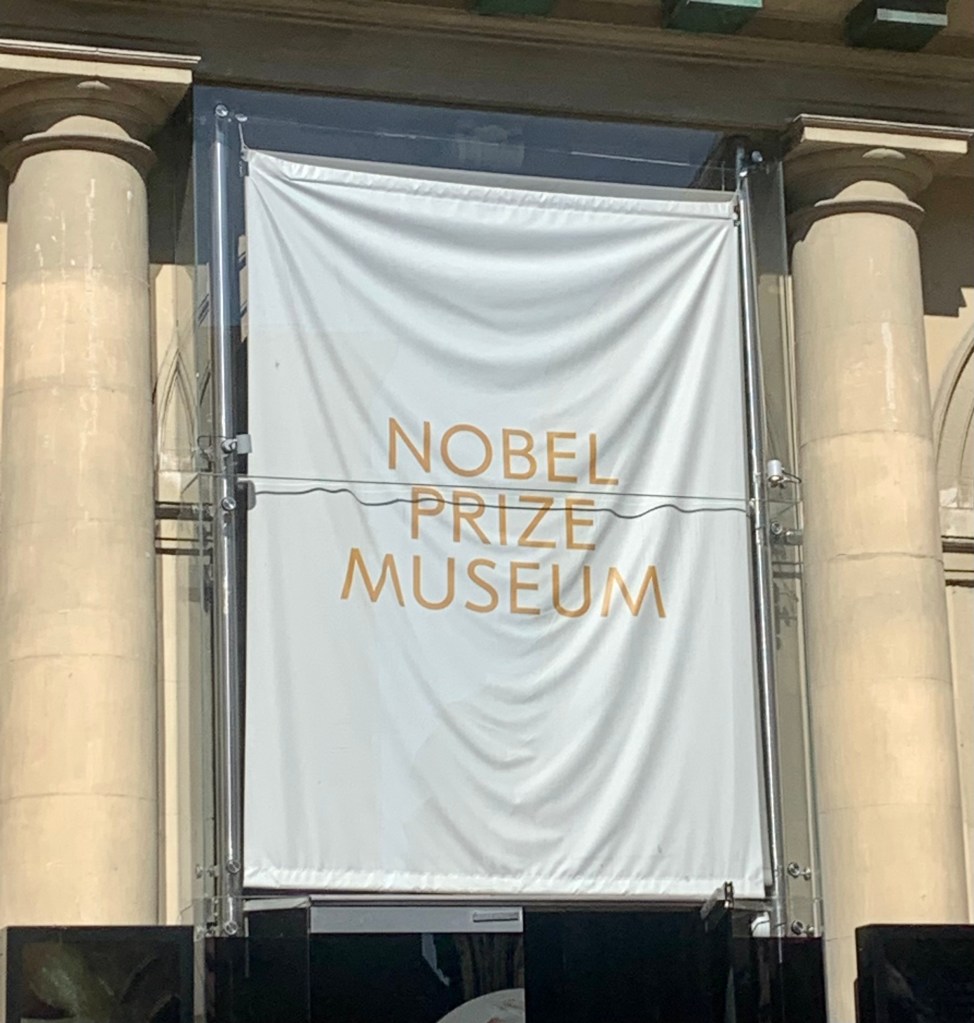
Over seven days we visited six countries (none of which I had been to before – Roberta had been to Denmark). It was not only educational but a lot of fun. We arrived in Stockholm a day early to wander around and took (of course) a ferry out to Artipelag to visit the museum.
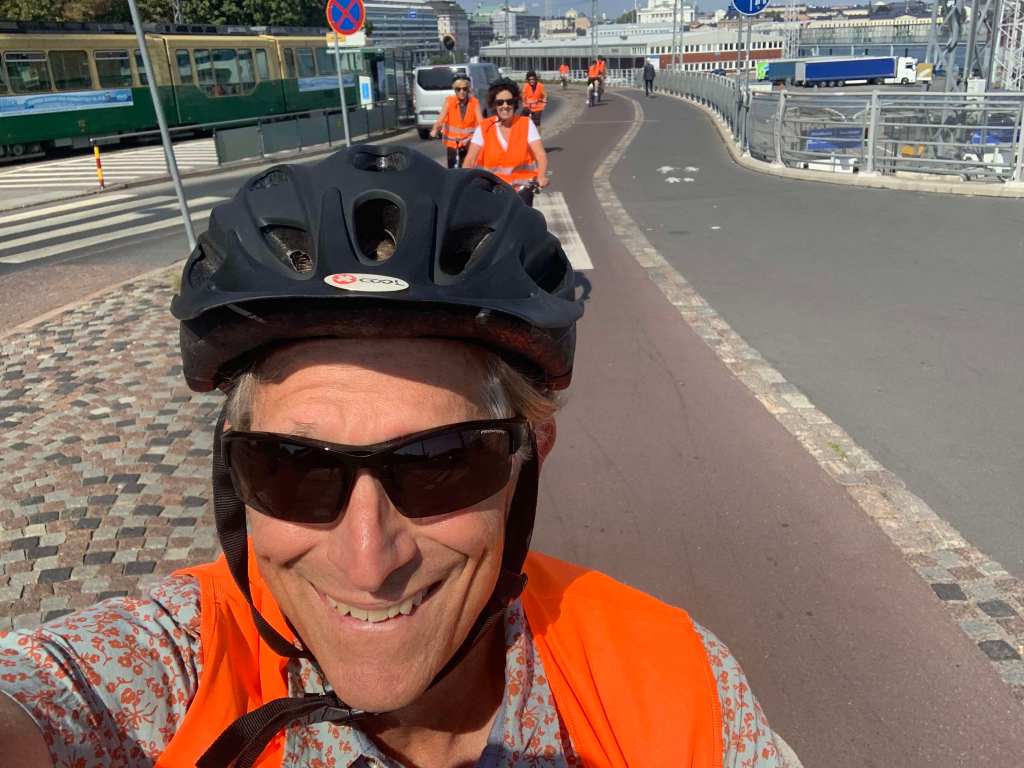
Then it was onto Helsinki where we did a bike tour of the city.
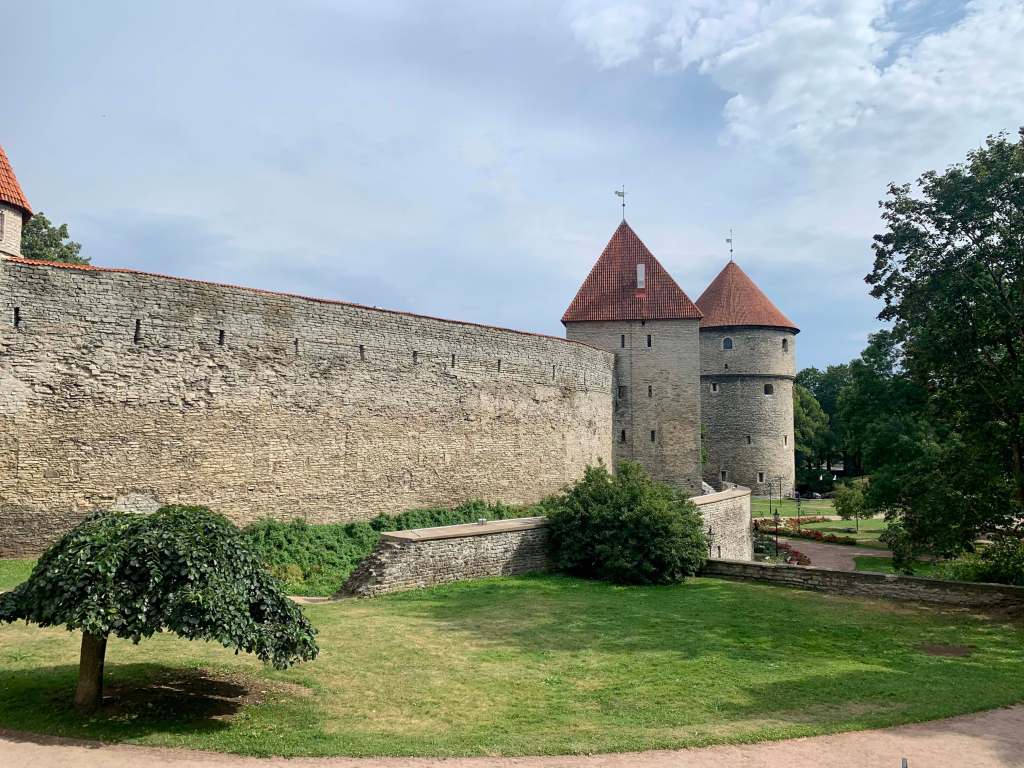
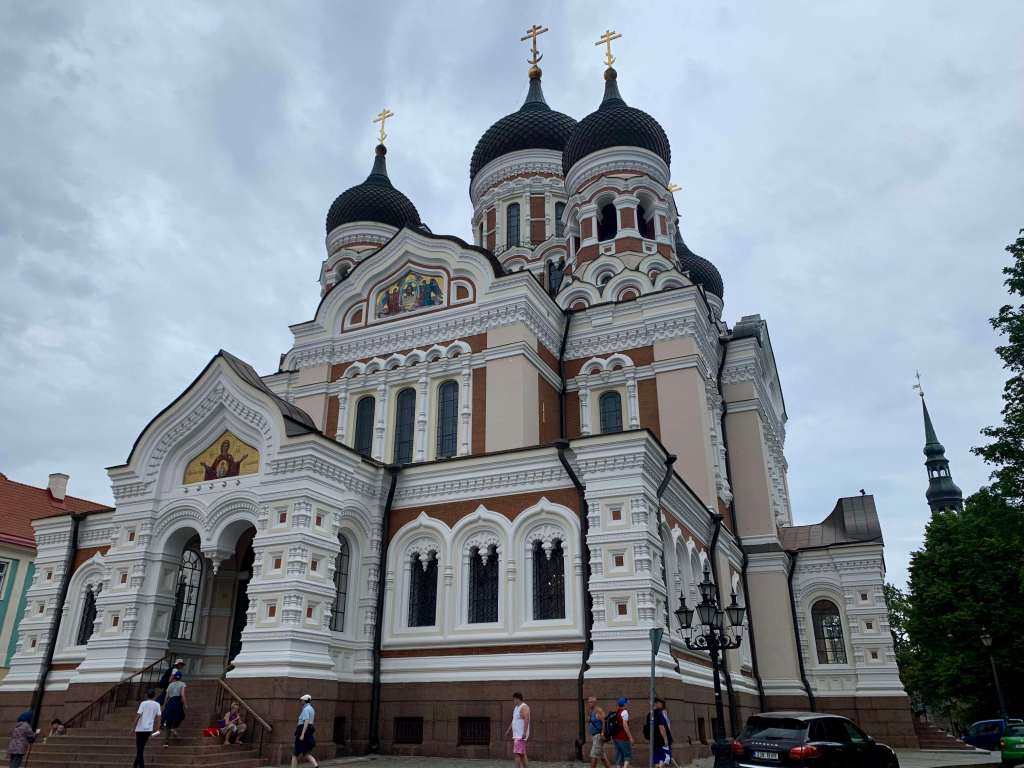
Then on to Tallinn where a very nice Estonian guide explained that they REALLY, REALLY don’t like Putin.
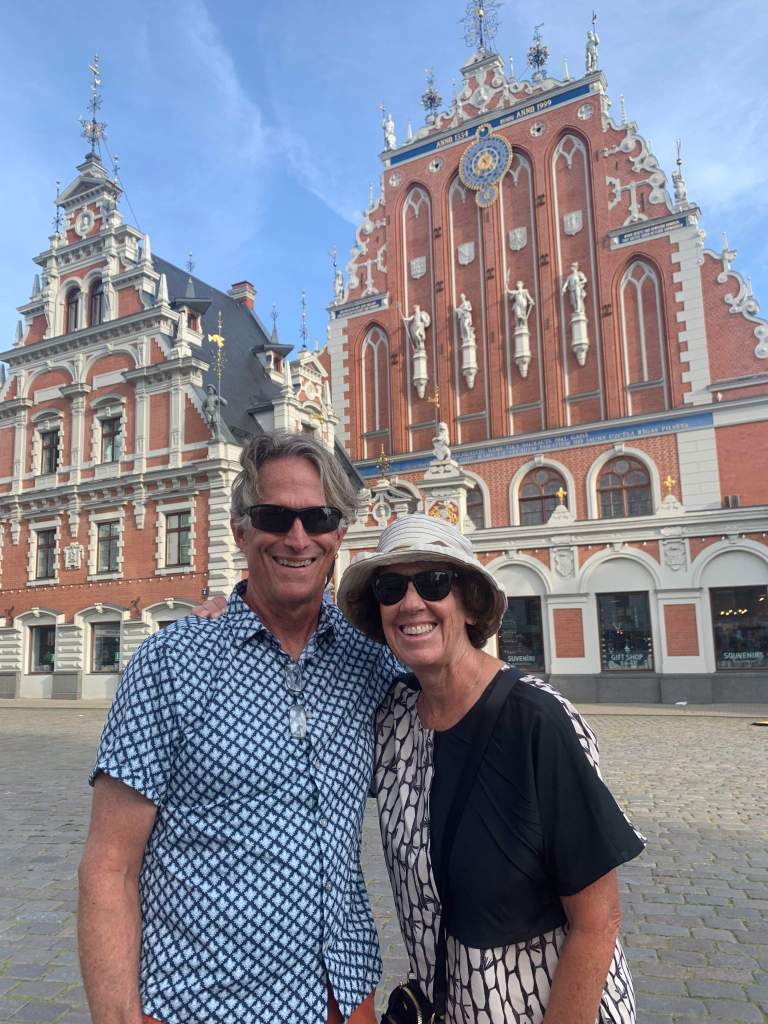
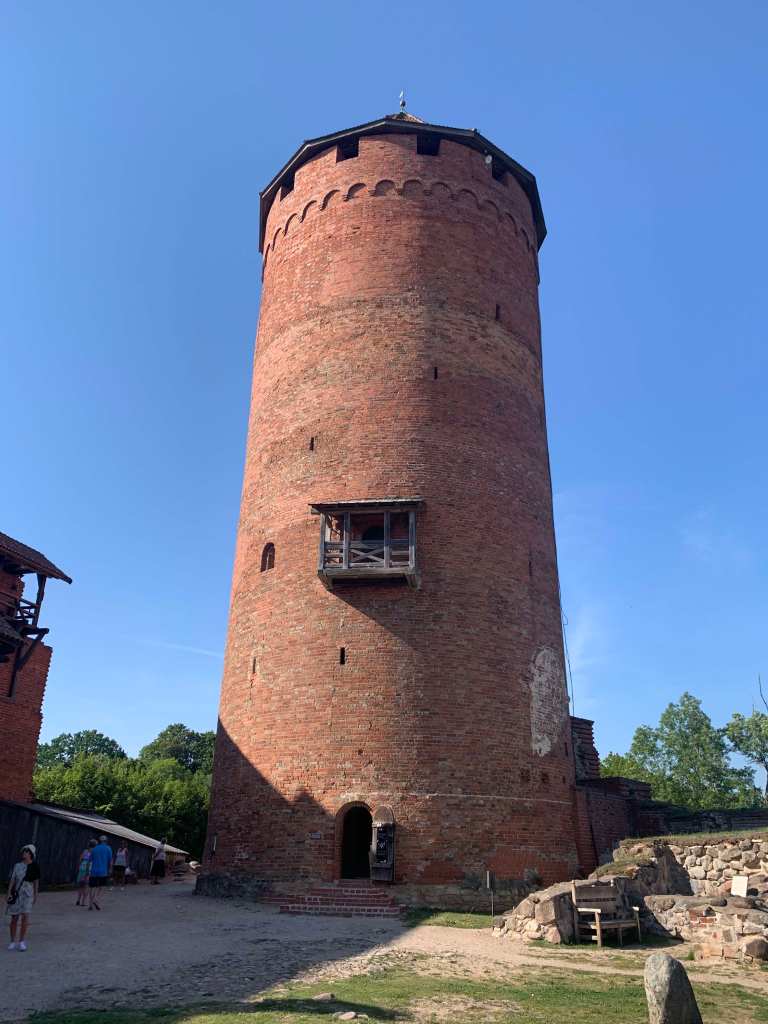
…. then Riga where, when asked, a very knowledgeable Latvian guide explained that the border with Russia was “not a Latvian-Russian border… it is a NATO-Russian border.”
Then back to Swedish territory, Visby on the island of Gotland where they have the longest continuous medieval wall still in standing. Our tour guide was a Brit who moved to Visby 40 years ago.
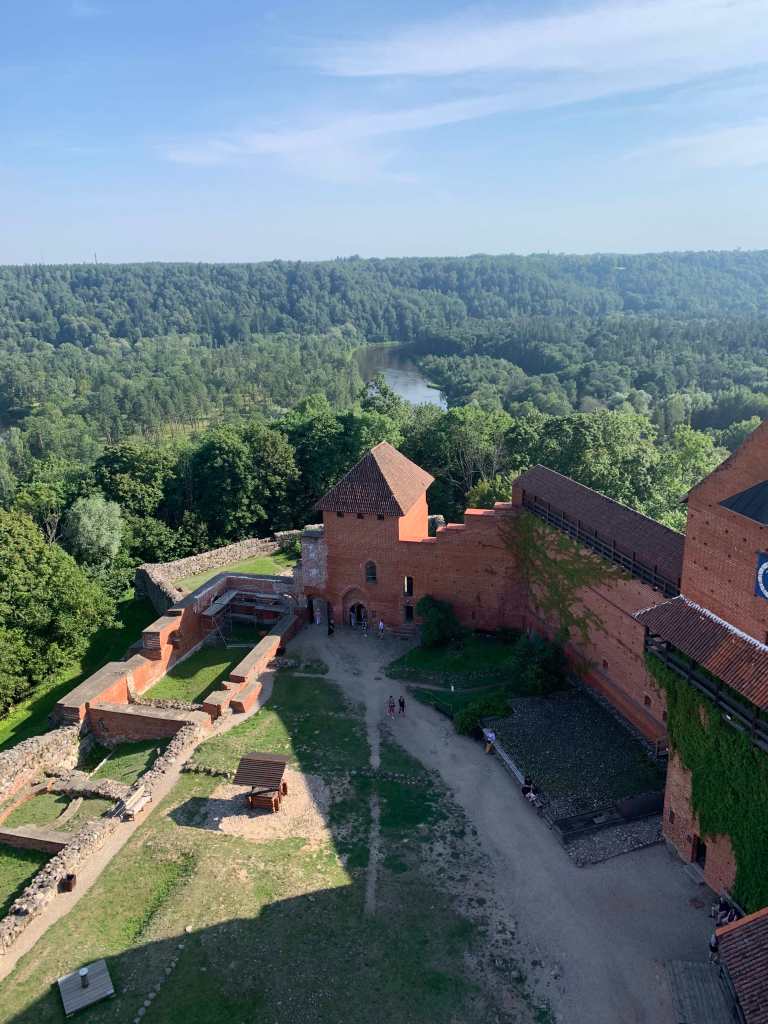
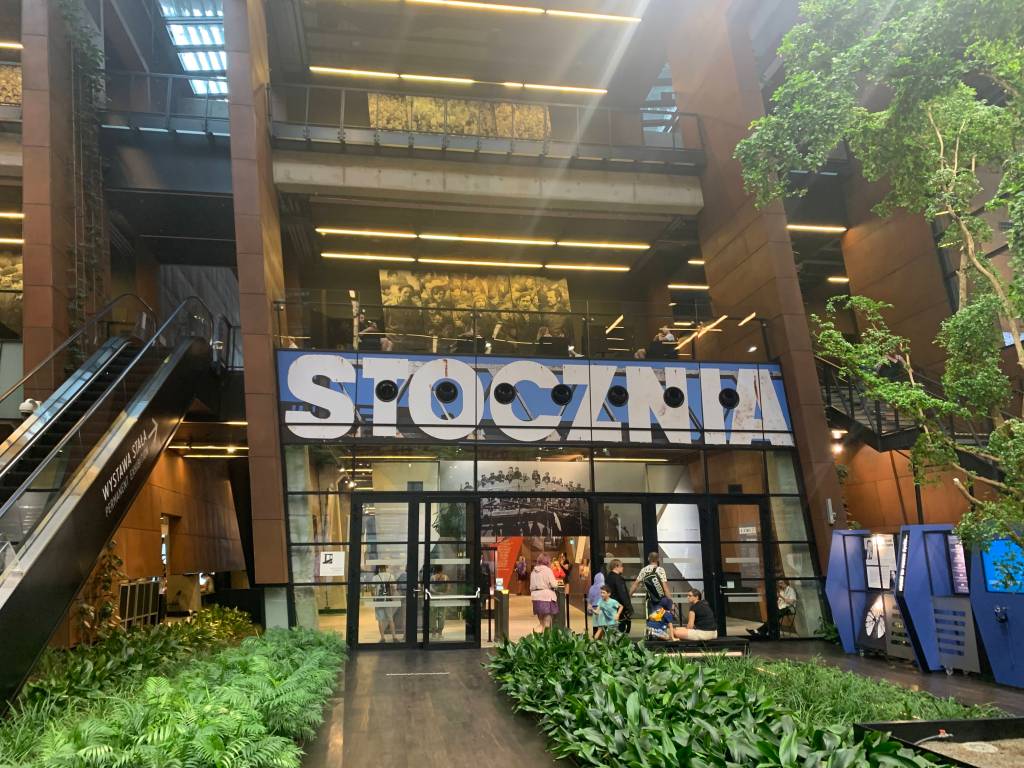
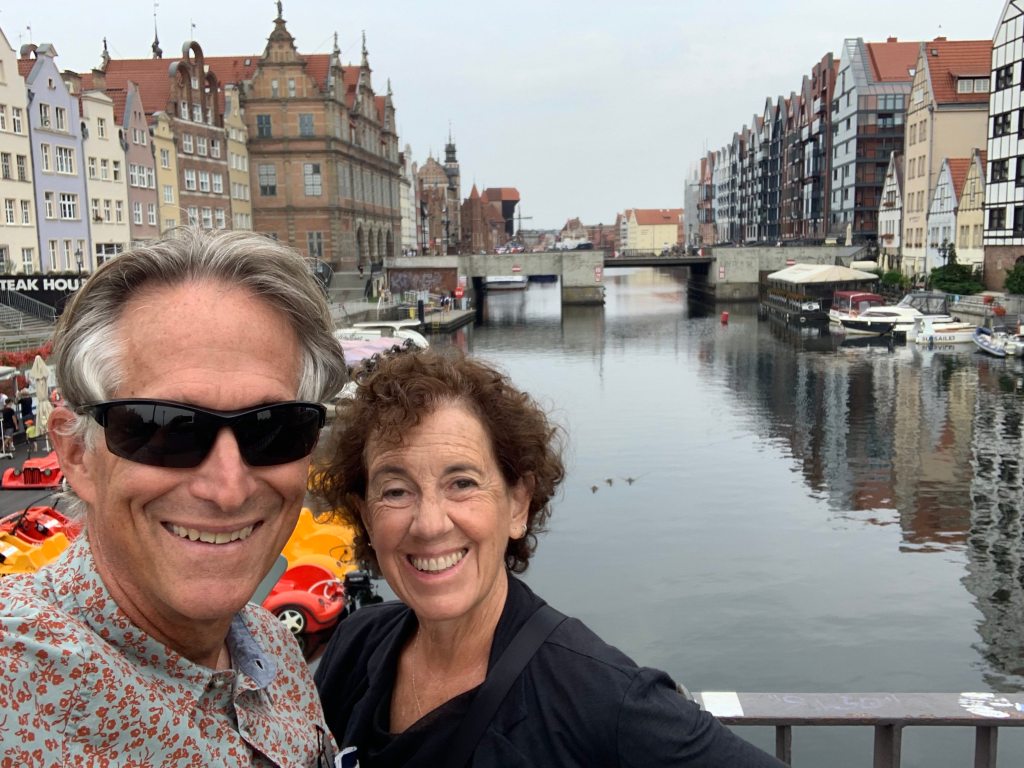
Okay… the places are coming pretty fast and they have several full bars on the boat so … oh right… next was one of my favorite, Gdansk Poland. The Solidarity Museum was very moving and a place I wish all our Neo-fascist MAGA folks could visit.
We finished off the northern navigable portion of the Saône on July 28, exiting the final lock (#1) at Corre. Our last lunch on the Saône was a typical nature mooring. Thank goodness we have a master line-wrangler in the crew!
We elected to moor at the small village dock rather than the marina in Corre which turned out to be an excellent choice.
Our Mooring in Corre
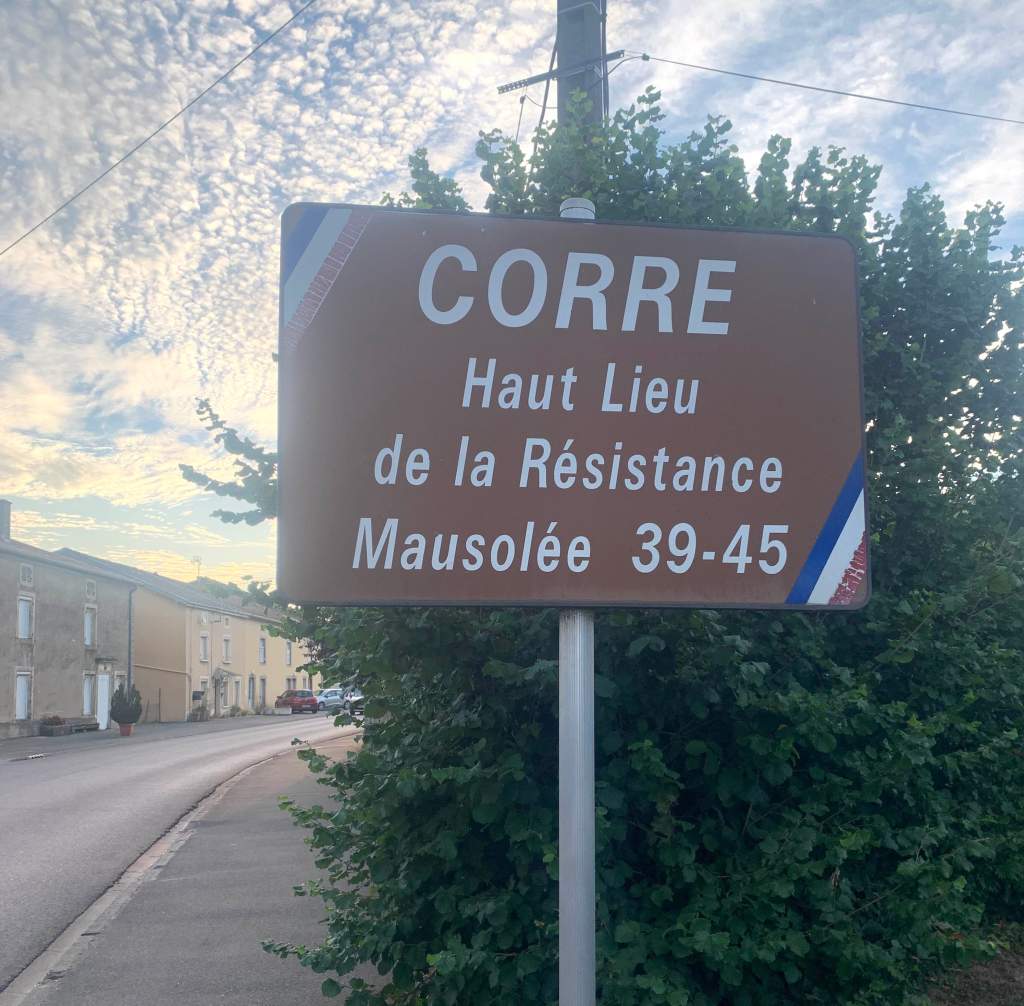
And Corre was in occupied France during the war and, clearly, a hotbed of the resistance.
The next day we entered the Canal des Vosges heading toward Epinal. Lots and lots of locks! In 15 km we did 11 locks and most of them were quite deep (over 3 meters). Near Fontenroy-le-Chateau we met a VNF guy who asked how far we were going. We told him “Epinal” and he shook his head and said something about “bad water”.
Around lunch time, as we were passing through the Fontenroy port de plaisance, several people at the Le Boat base came out waving their hands and shouting that the canal was closed. And so… after confirming with the VNF, Fontenroy was, sadly, as far as we would be going on the Canal des Vosges this year.
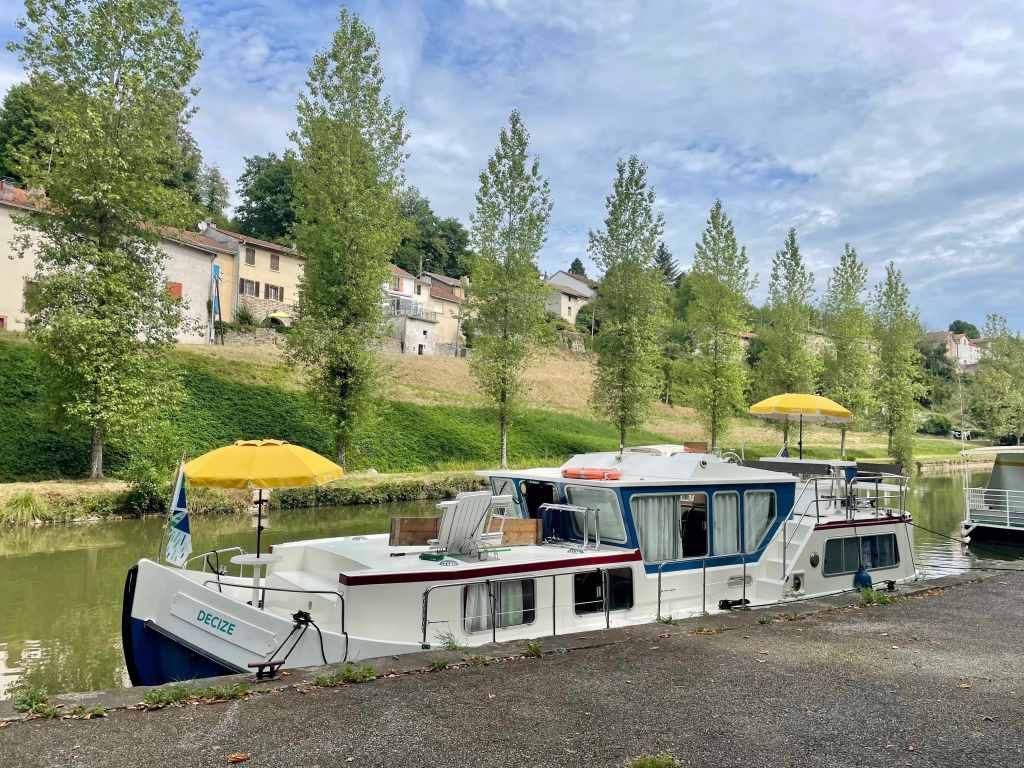
Our Mooring in Fontenroy-le-Chateau
This part of France is in a drought and the reservoirs (“etangs”) are very low)so the canal was closed at lock #24.
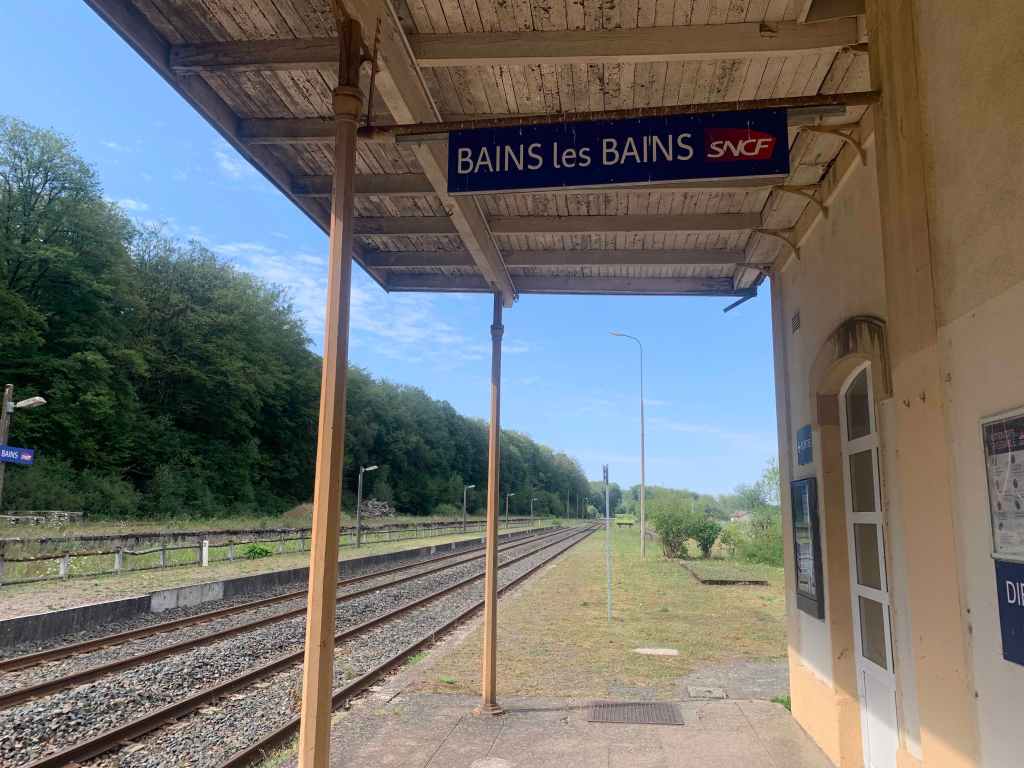
The (very remote) Bains-les-Bains train station.
Not willing to give up (since Roberta had a scheduled hair appointment in Epinal) we rode our bikes (uphill!!!) to the Bains-les-Bains train station and caught a train to Epinal.
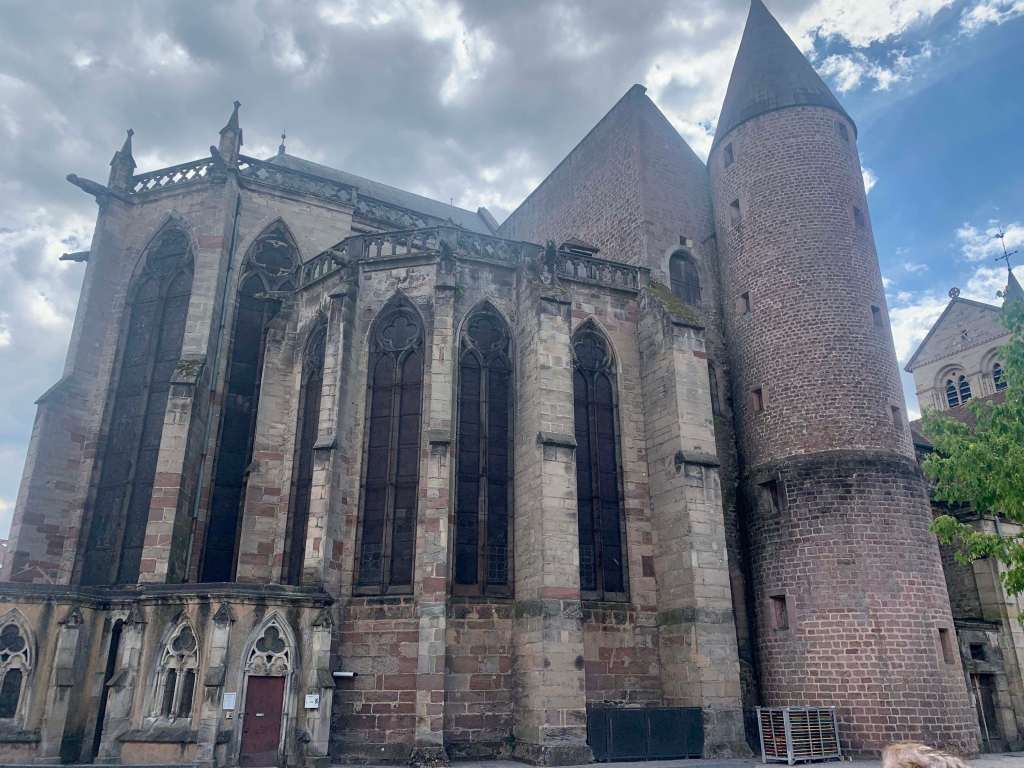
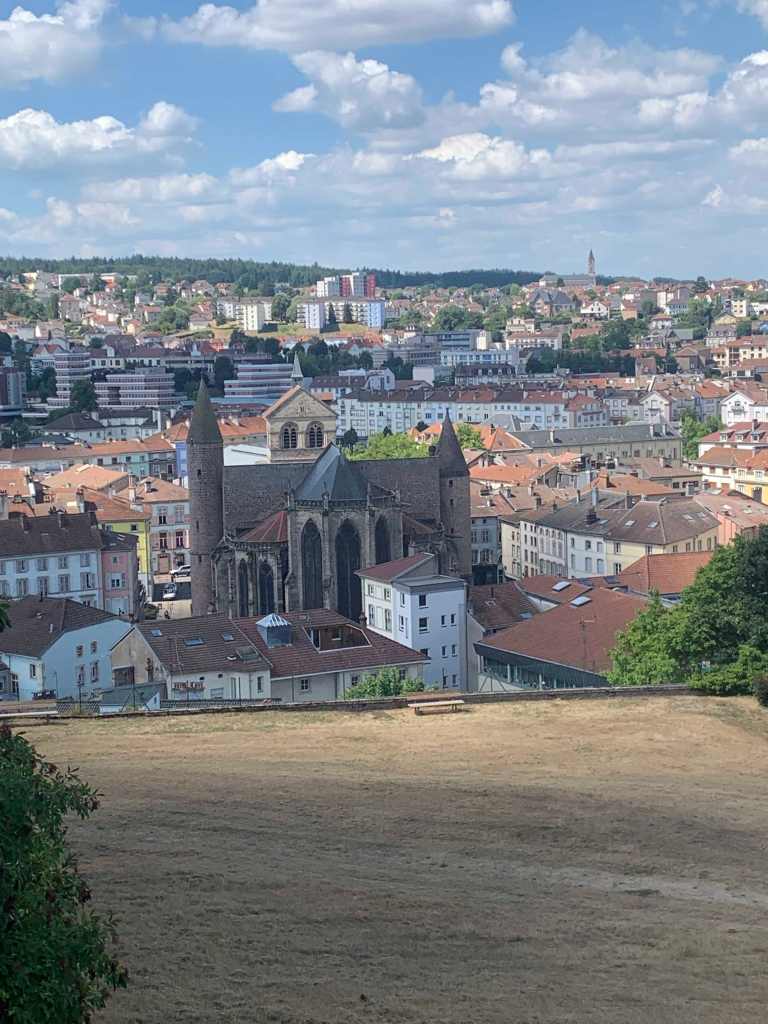
Cathedral in EpinalView from chateauNo…. really. No.The wines NOT on the winelist
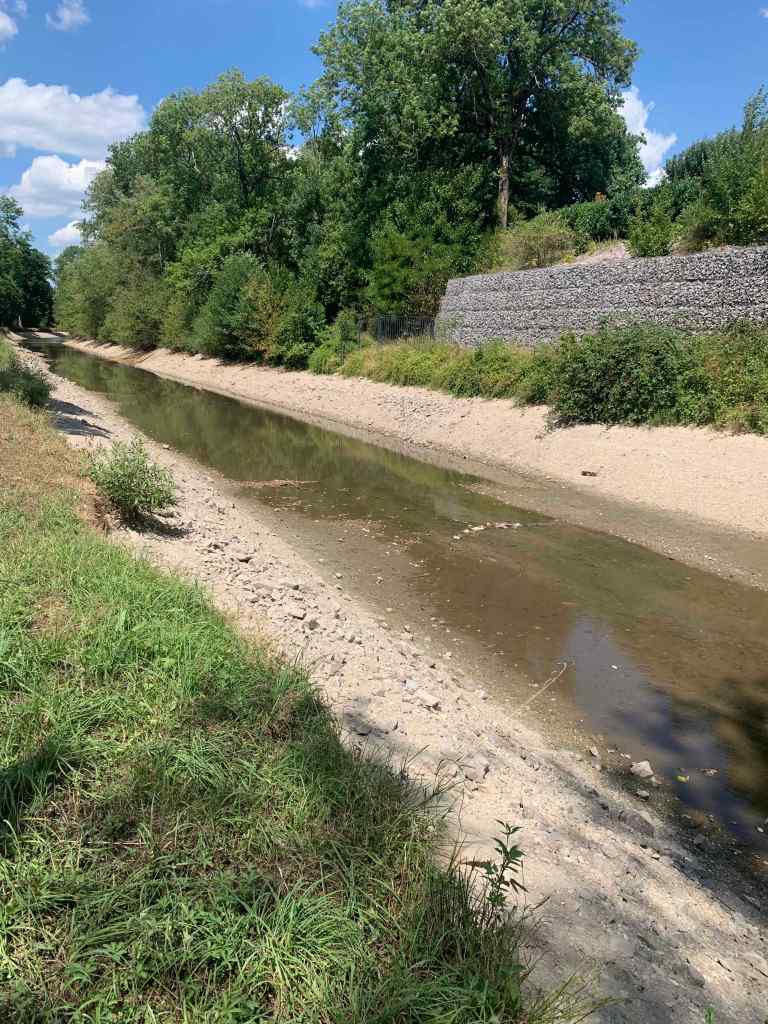
We spent the night at a hotel (our first real bed in over two months) with AC!!! The next day we rode our bikes out along the Epinal branch canal (that connects with the Canal des Vosges) and it was nearly dry.
Epinal branch canal. Nearly dry.
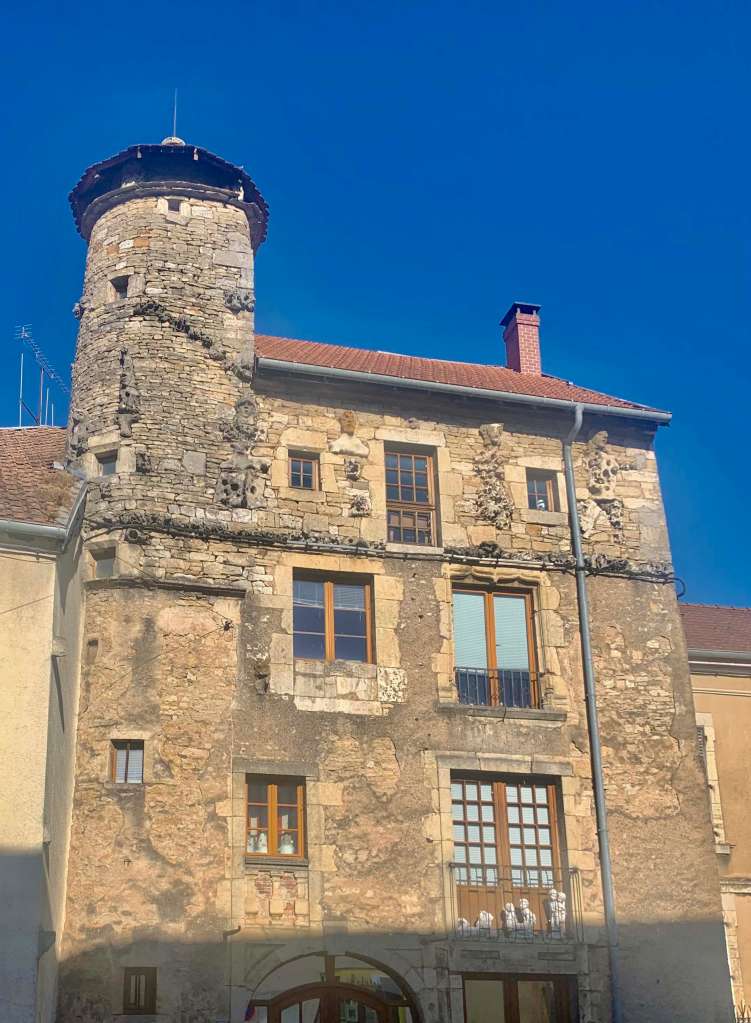
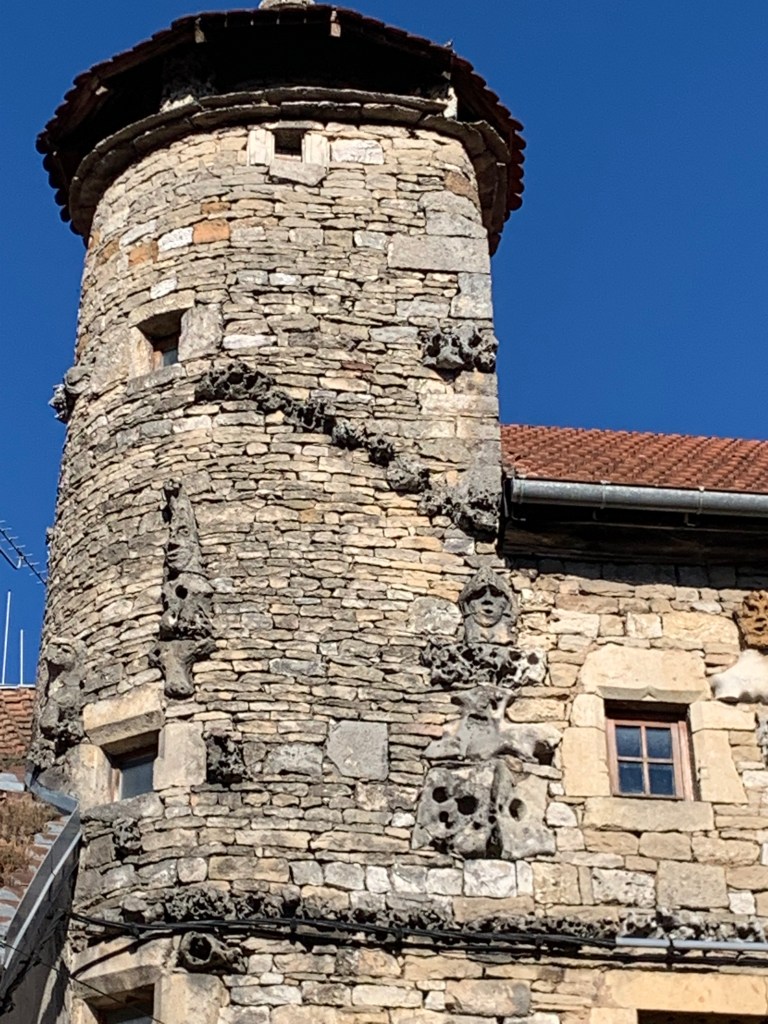
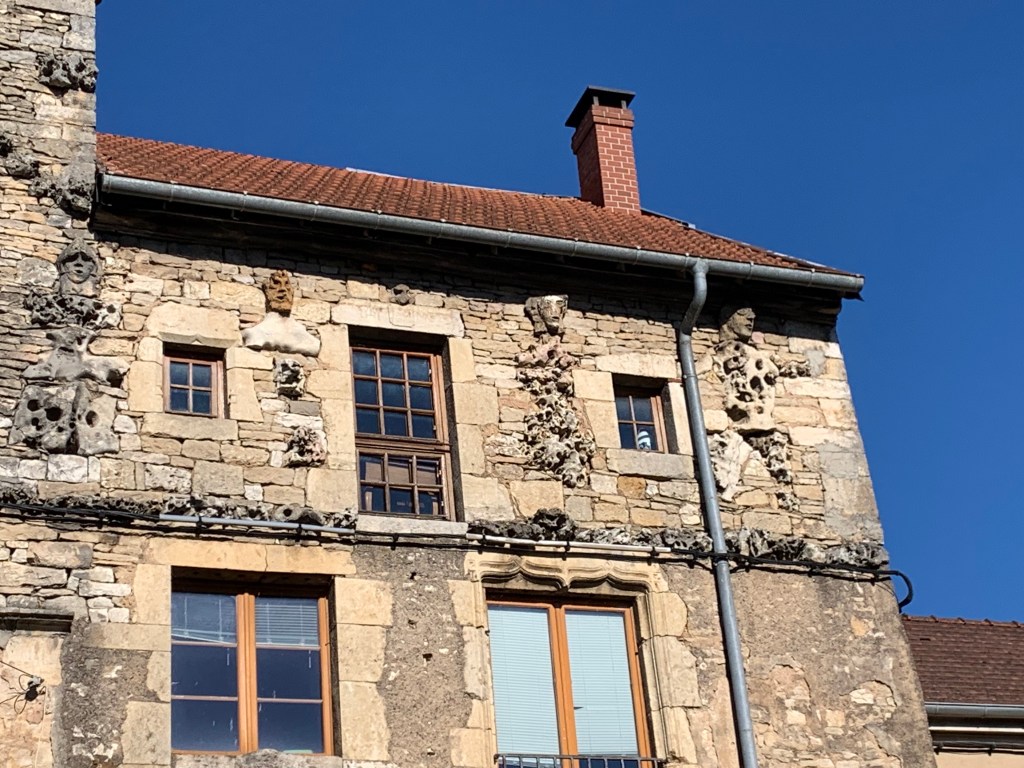
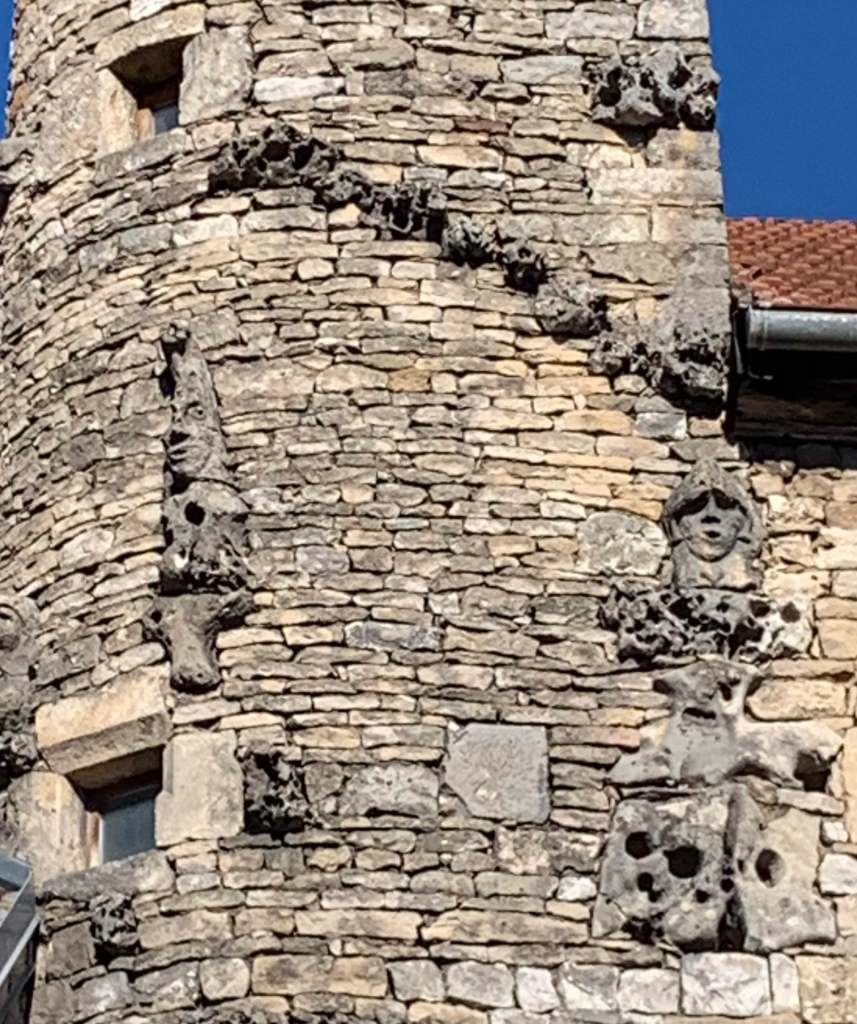
So ended our trip north. After train/biking back to Fontenroy we headed back south to the Saône. We stopped at Scey-sur-Saone our second night back on the Saône. A nice little town with a very strange old building (but a good pizza place for Martini Night!)
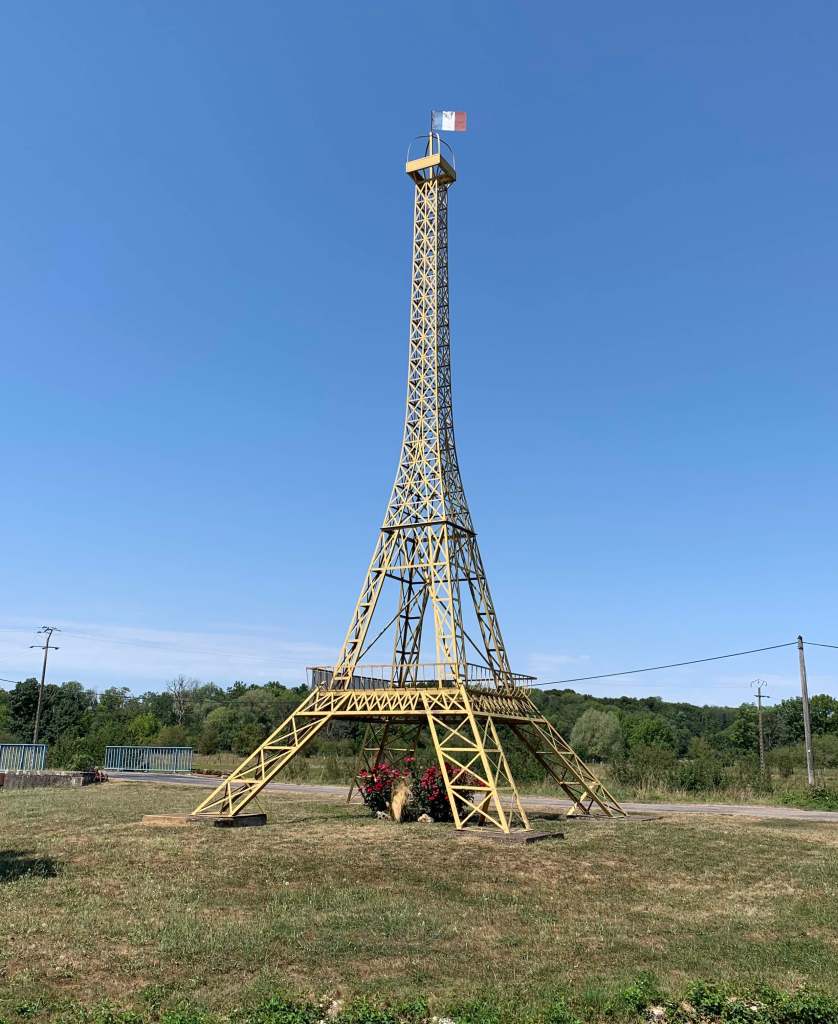
And today we ended up a very dead little town, Soing (no boulangerie, no bar, no cafe, no epicerie) but a pleasant mooring. And, of course, they have the Eiffel Tower. So
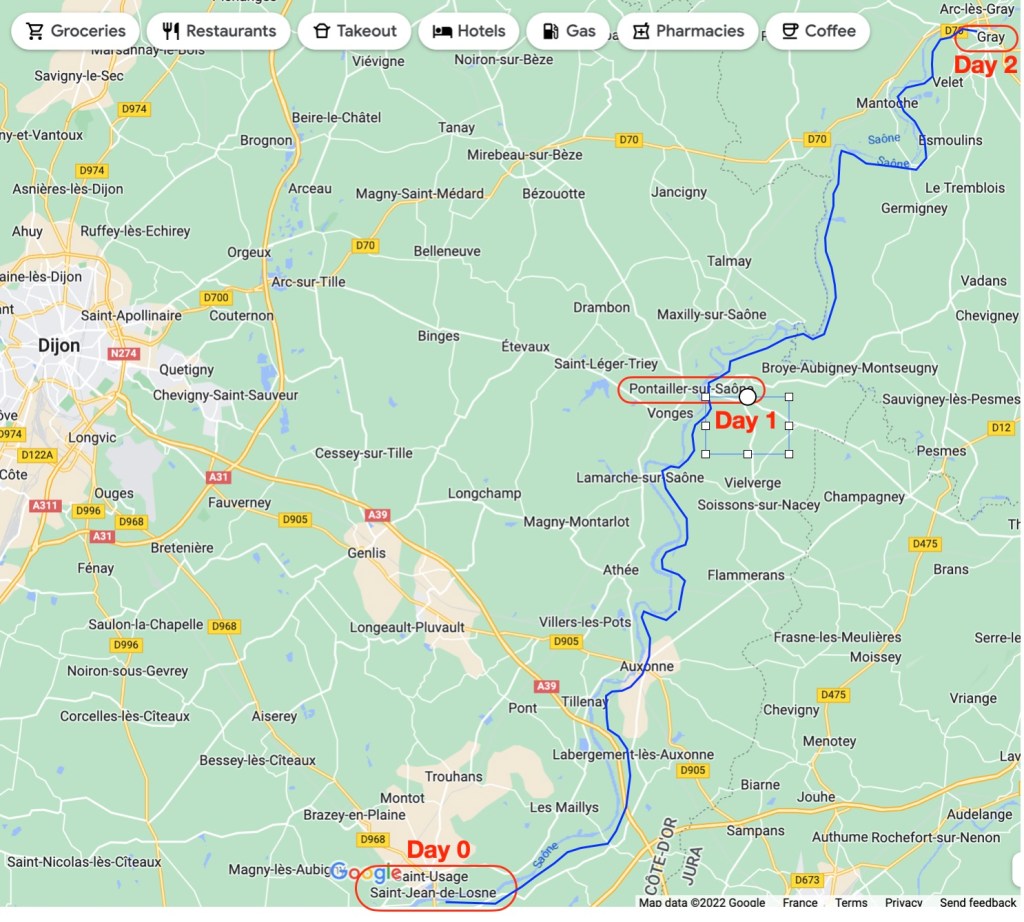
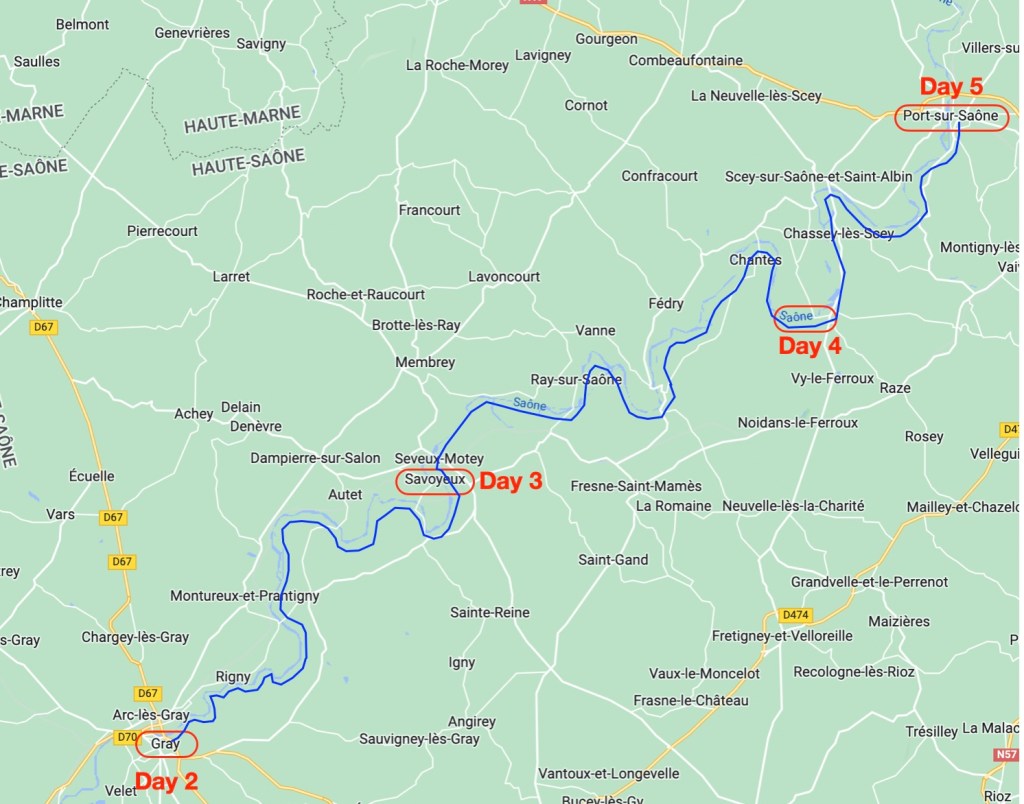
With about three weeks left before we head off for our Baltic cruise we decide to explore the northern reaches of the Saône.
We’ve had a couple of really hot days but, for the most part, the weather has been lovely. The nights are usually in the high 50’s to low 60’s and the days usually top out in the mid-80’s.
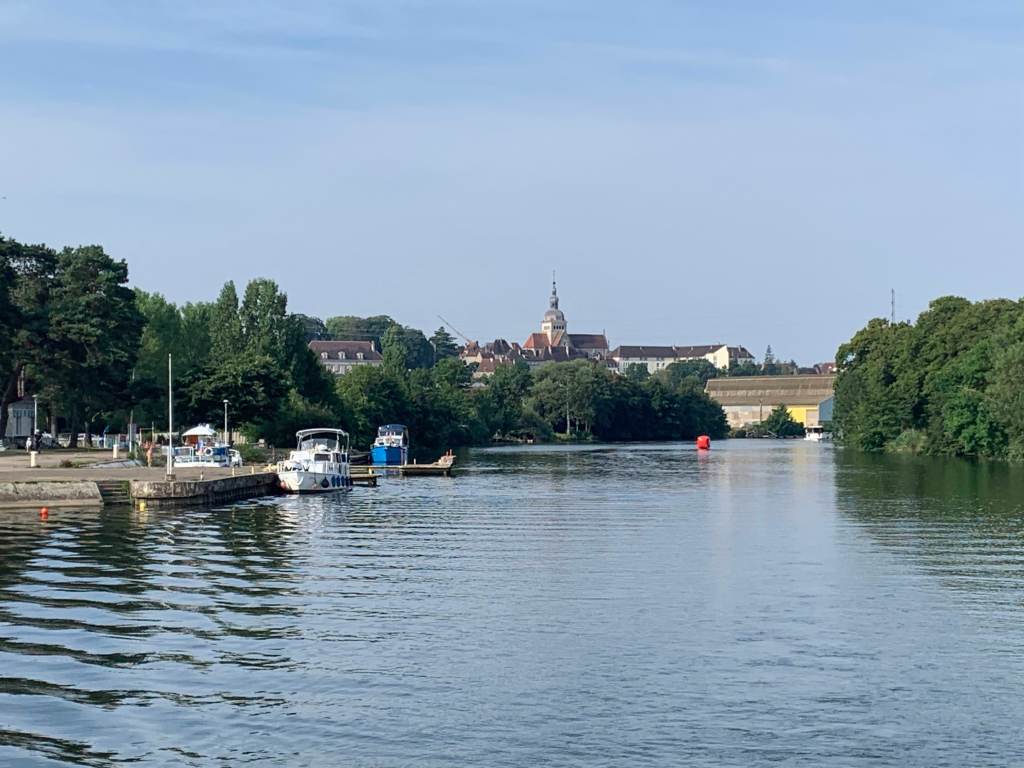
Leaving Gray, our second night out on the Saône
We usually try to stay in marina’s or towns with electricity service so we would have fans in the evening (I am working on changes to the boat wiring to allow us to have fans when we are not on shore power).
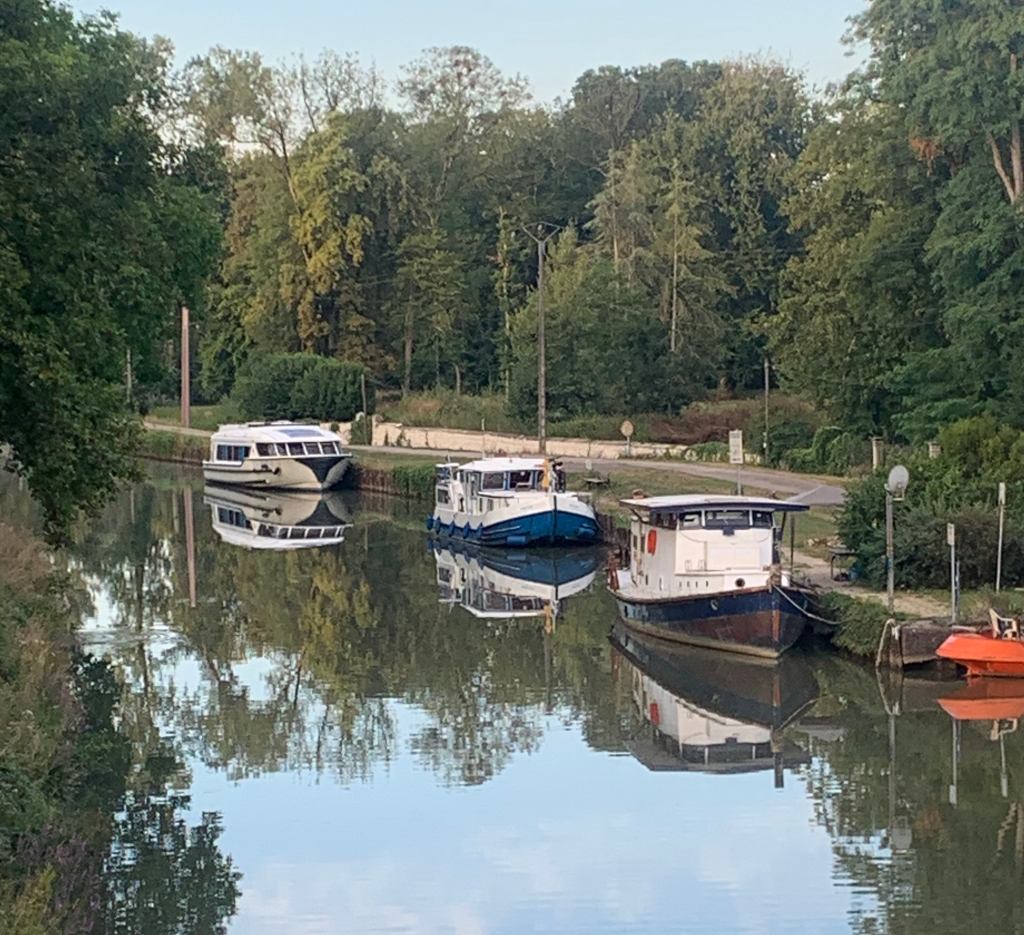
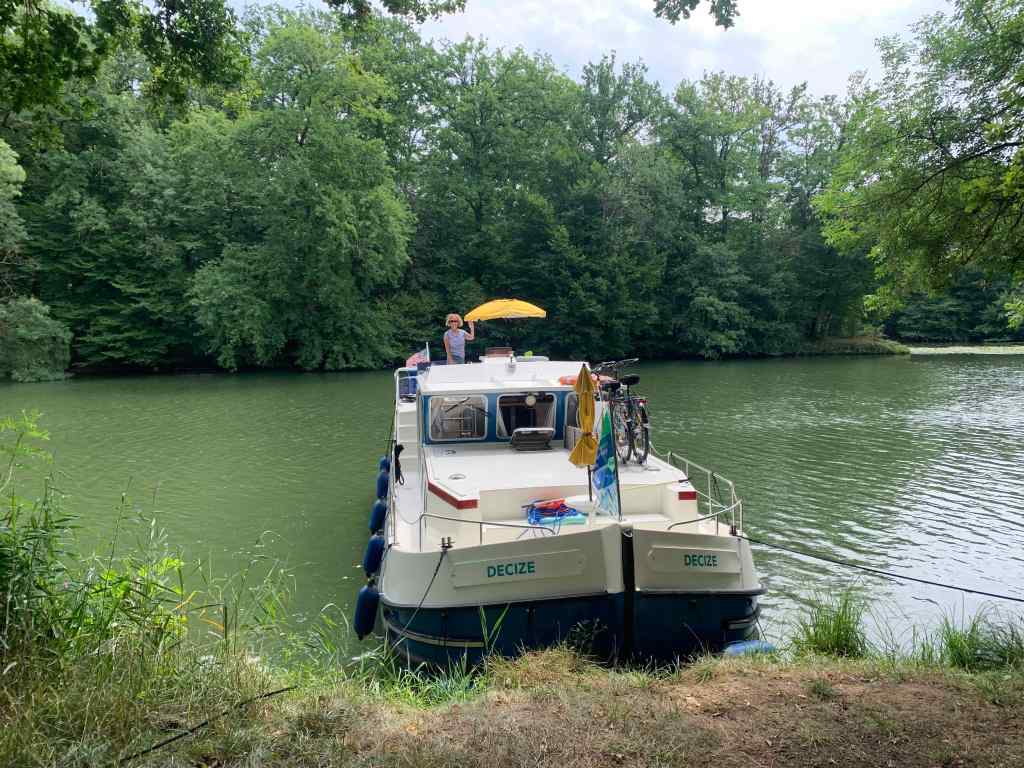
Nature mooring
We are feeling more comfortable about nature mooring (nosing up to the bank and shutting off the engine) since I think I have found (and fixed) the engine starting problem.
Bert helming through the “Souterrain de Savoyeux”
Most of the time we are in the river with short “deviations” through canal sections to bypass portions of the river that are not navigable. We usual do 2-4 locks per day though they tend to be pretty deep (3 meters or so). And we did have one bad experience sharing a lock with a couple who clearly did not know what they were doing – their boat kept hitting the front doors. Not good.
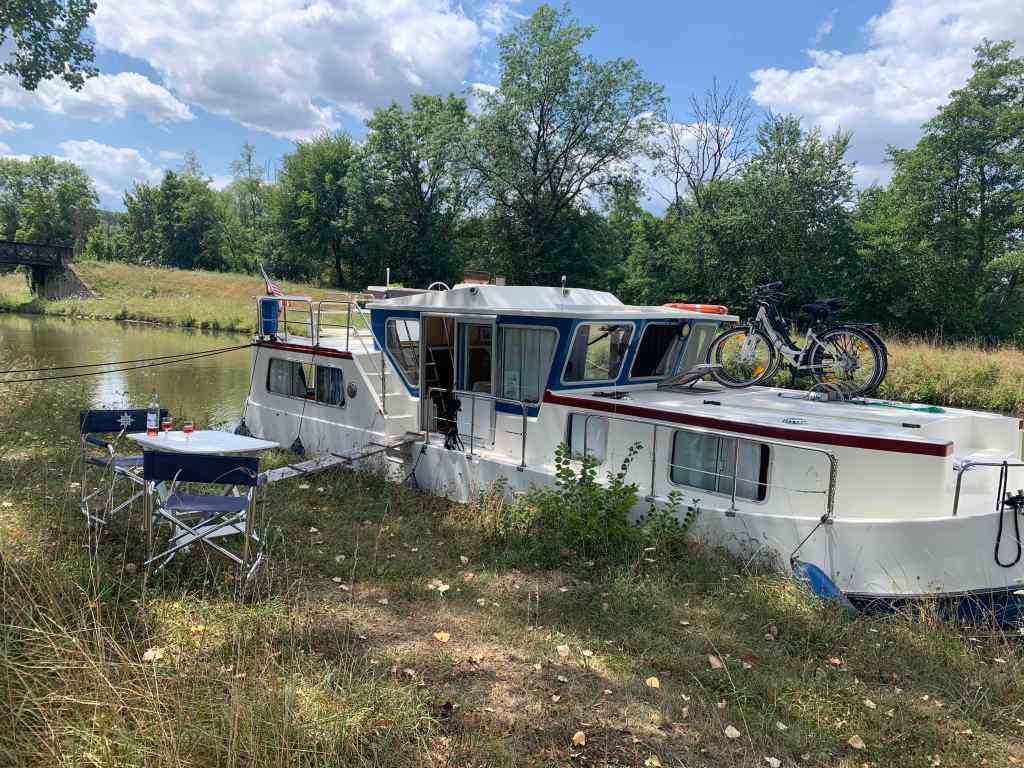
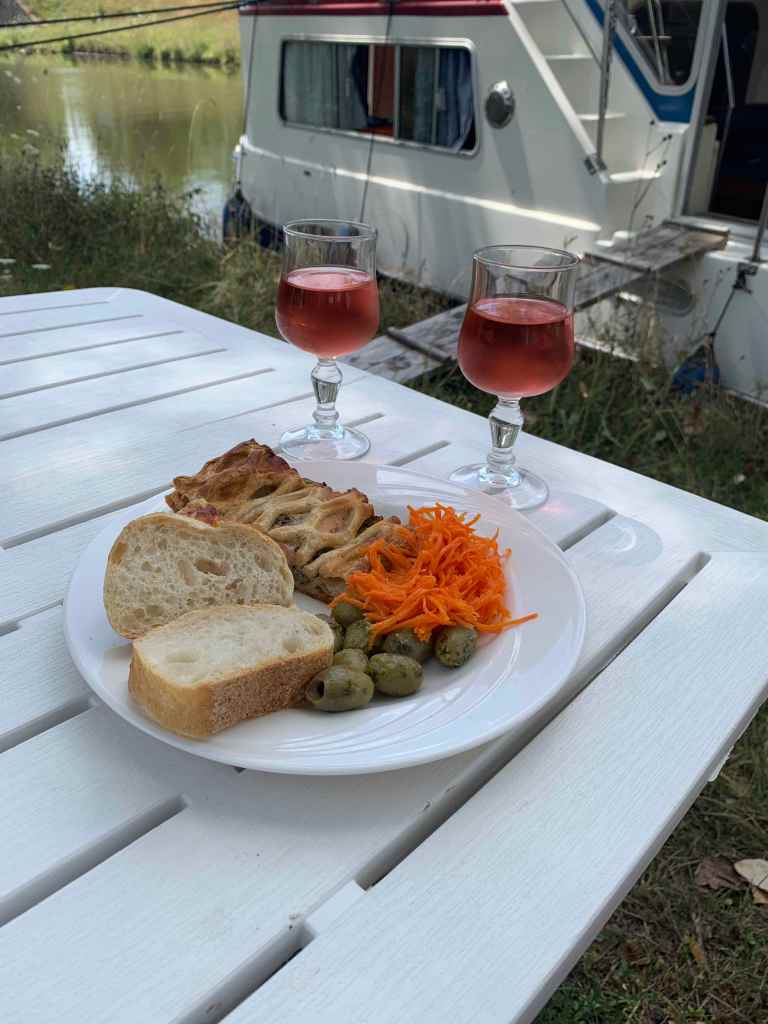
Cocktails on shore
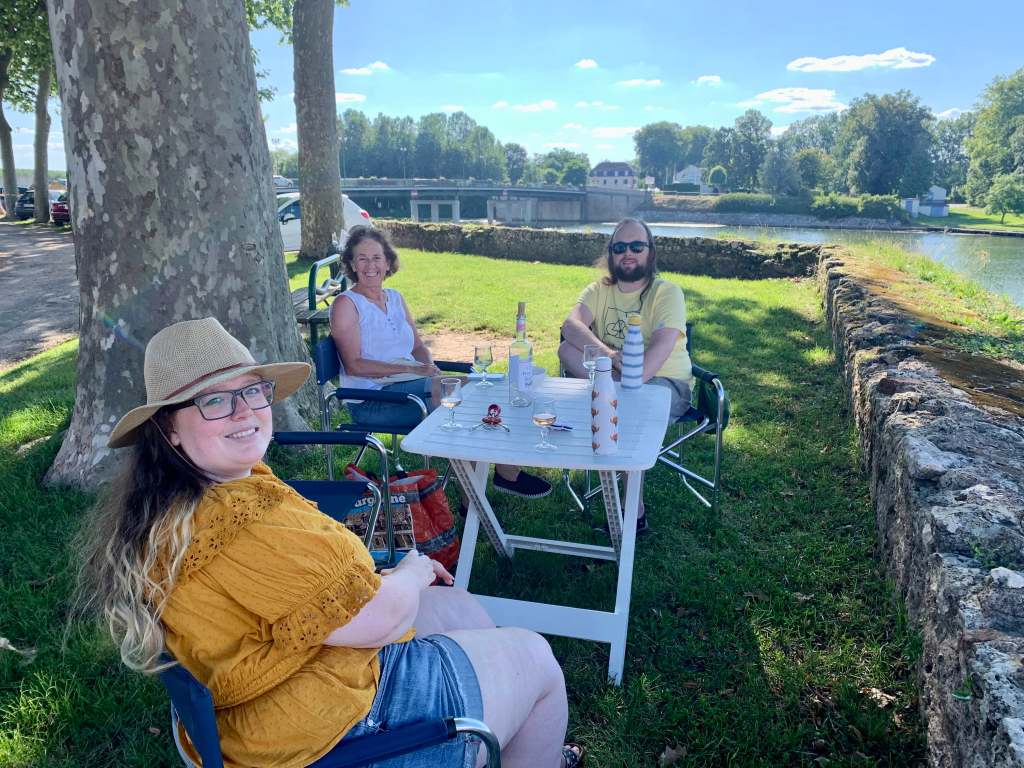
We often have dinner off the boat when we are in marinas since there is often little shade. We deploy our table and chairs and enjoy the shade.
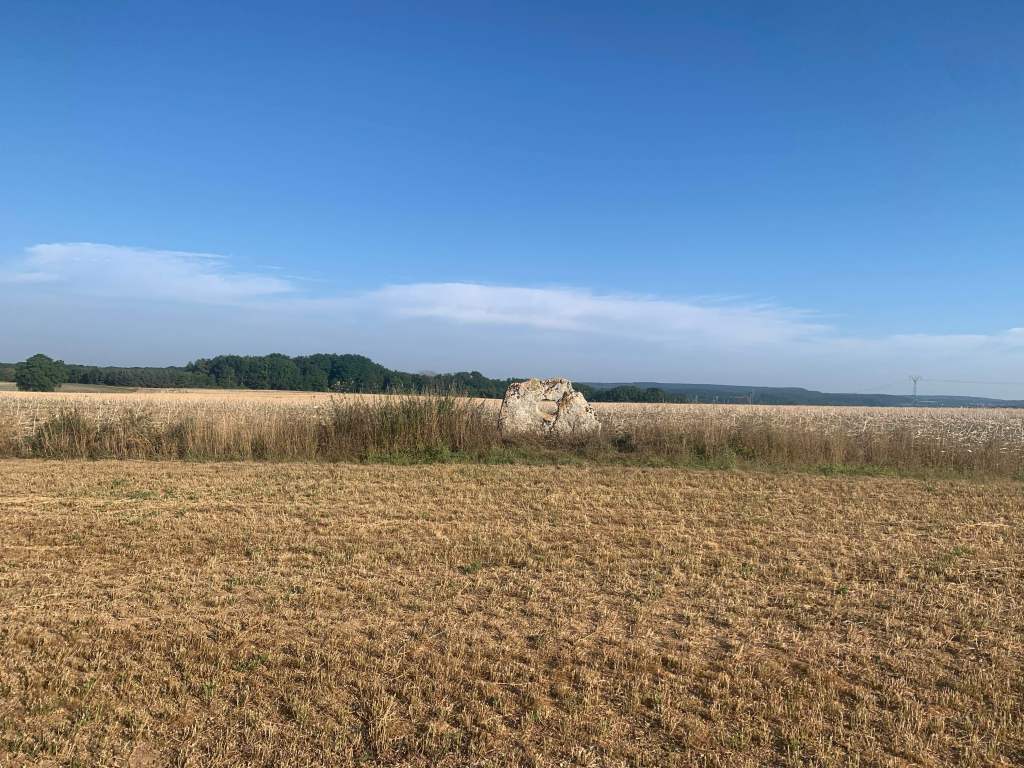
We stop during the day at any place that looks interesting (a chateau or the remnants of a 13th century castle for instance). And we took a short side trip to Traves to see the “Pierre Percée” (pierced standing stone). They have no idea how old it is or who put it up.
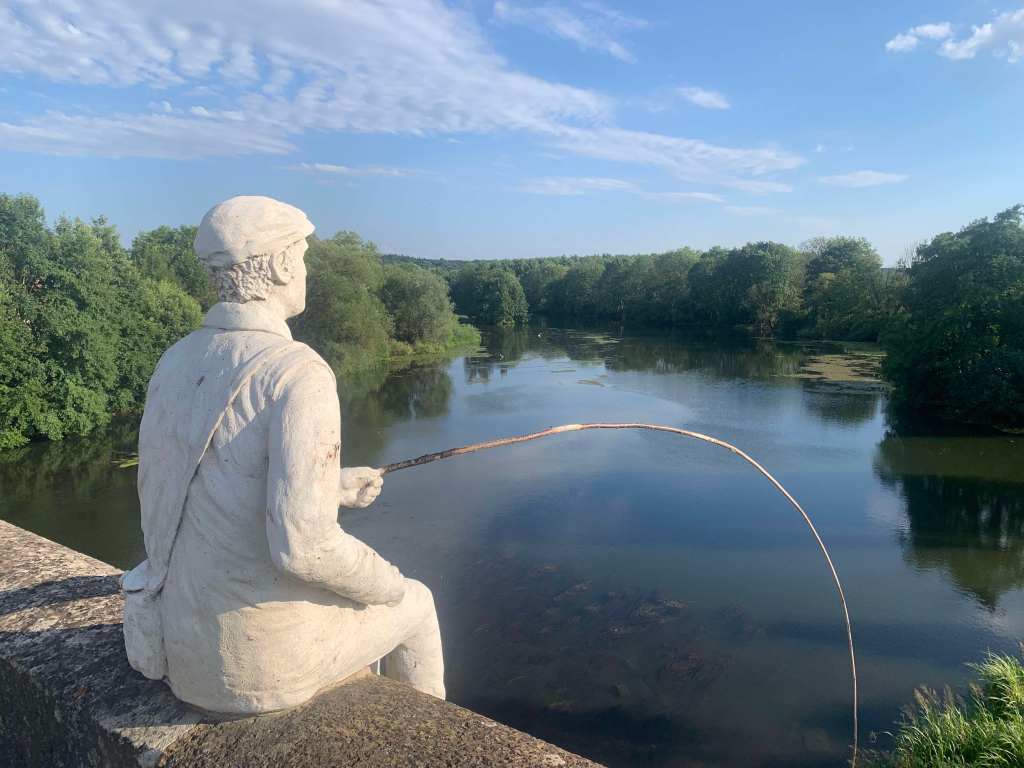
And we always try to slow the boat when we pass fisherman so as not to disturb them, though sometimes that is difficult.
After our shake-down cruise we welcomed Francis and Emilie on board for a week of cruising on the Rhine au Rhone canal. Still having engine starting issues but … it works most of the time.
Route for the weeklong visit of Francis and Emilie
With only a week we decide on a one-way cruise. First, a short jog up the Saone to Auxonne and then back down the Saone to catch the Canal de Rhone au Rhine (the Saone empties into the Rhone at Lyon so is considered part of the Rhone system).
Auxonne
Napoleon…. or a statue of himMain cathedral in Auxonne
Napoleon is pretty big in Auxonne – he went to military school here and they are quite proud of him. After walking around a bit we drug our chairs up to a pretty spot (out of the sun!) overlooking the river for a aperitif.
Wine!!!
A bit later the most amazingly dirty boat pulled in right behind us. I think it belongs to Pigpen.
And the award for dirtiest boat goes to…..
We left Auxonne in the morning and headed for the first lock on the Canal de Rhone au Rhine. The canal jumps in and out of the river Doube and a good part of our trip was in the river. The first lock is manned and we got a lecture about safety, locking technique and how to operate the remote that we were given to operate the locks in this canal (they are almost all automatic).
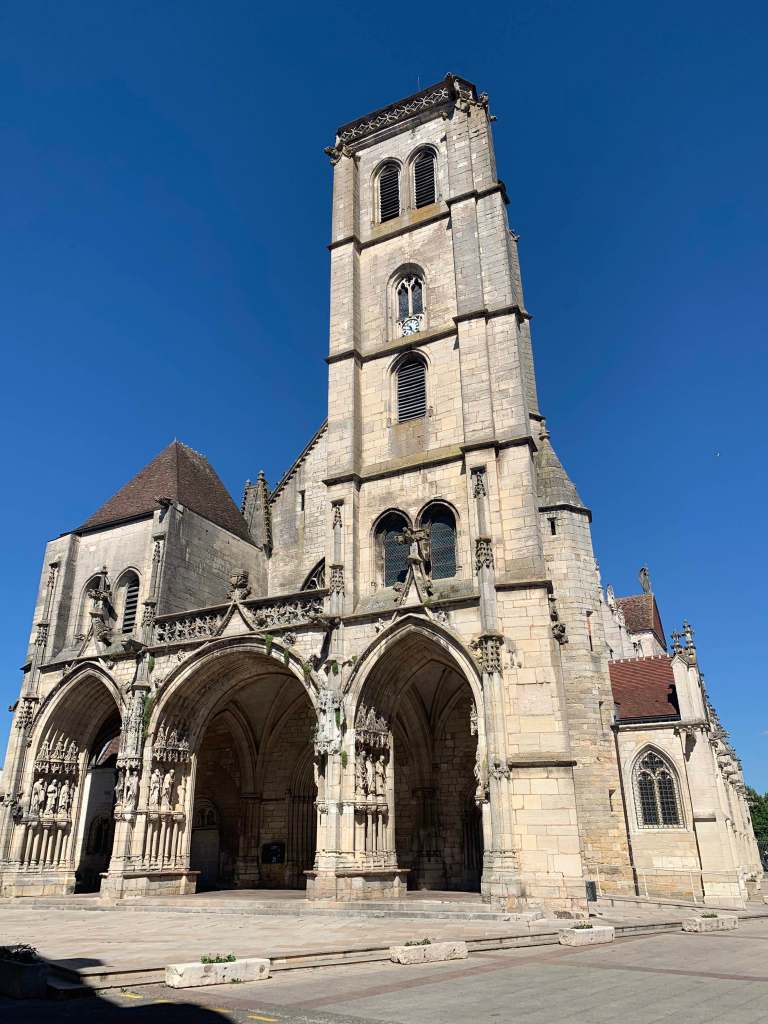
Dole
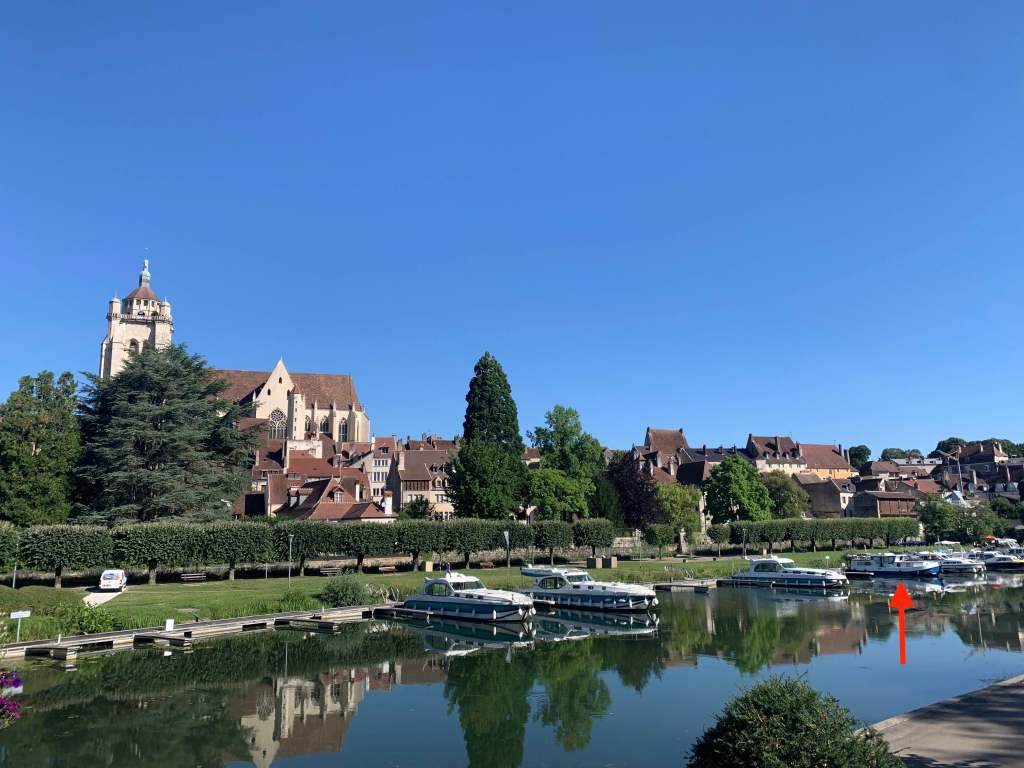
Marina with Dole in the background (arrow is our boat).
We did a longish day (7 locks and 25Km) to get to Dole. We planned to spend all next day here exploring. This turned out to be a great call since Dole is wonderful. Charming city with lots of shops and restaurants and the marina is quite nice.
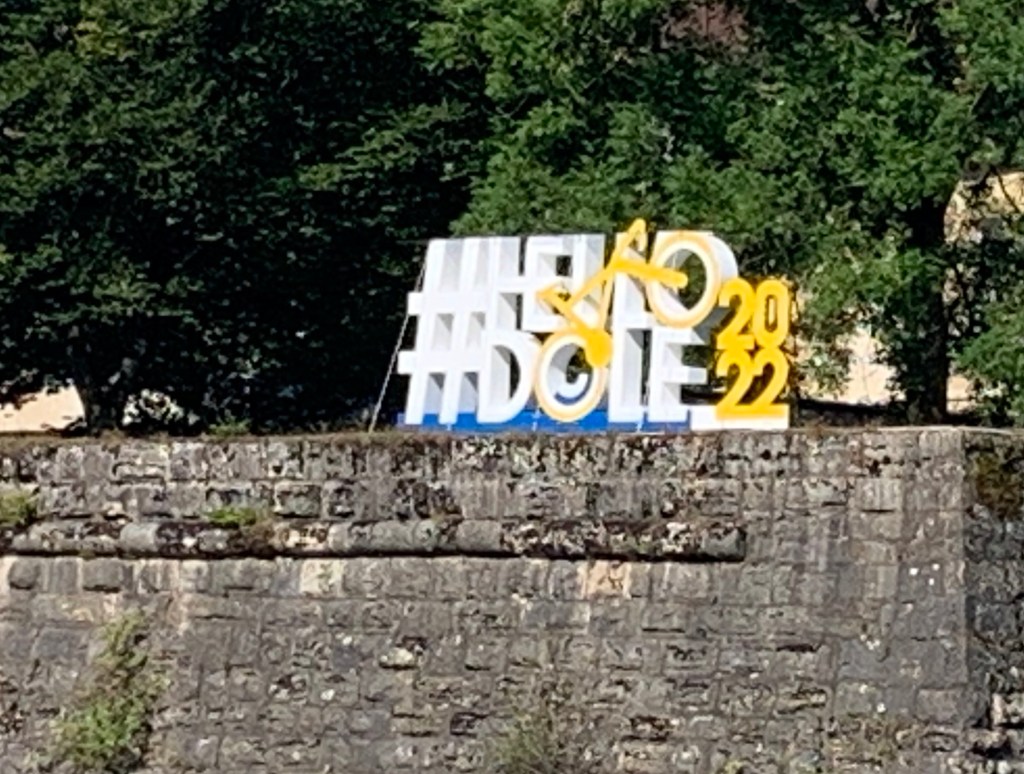
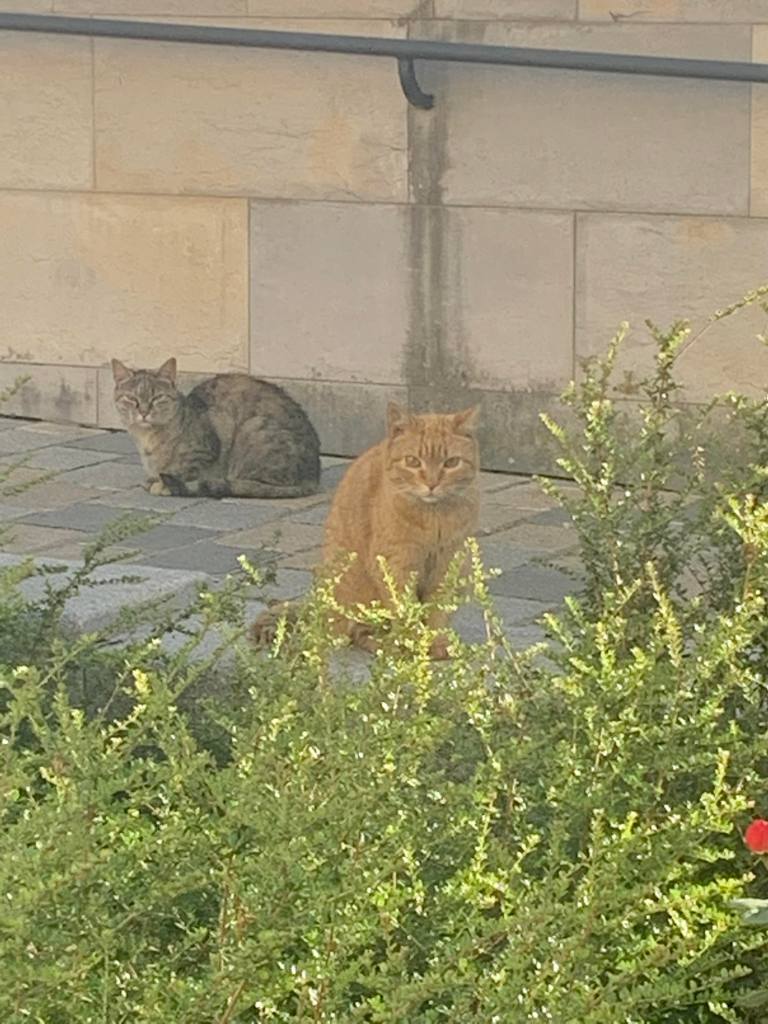
Louis Pasteur was born hereThe Tour is coming!!!??Le chat qui perche
And Louis Pasteur is BIG in Dole. He was born here and this year is the bicentennial of his birth. We had a nice dinner at a place on the (no longer used) Canal des Tanneurs where, incidentally Pasteur’s father had a business and where Pasteur was born.
Dinner on the Canal des Tanneurs
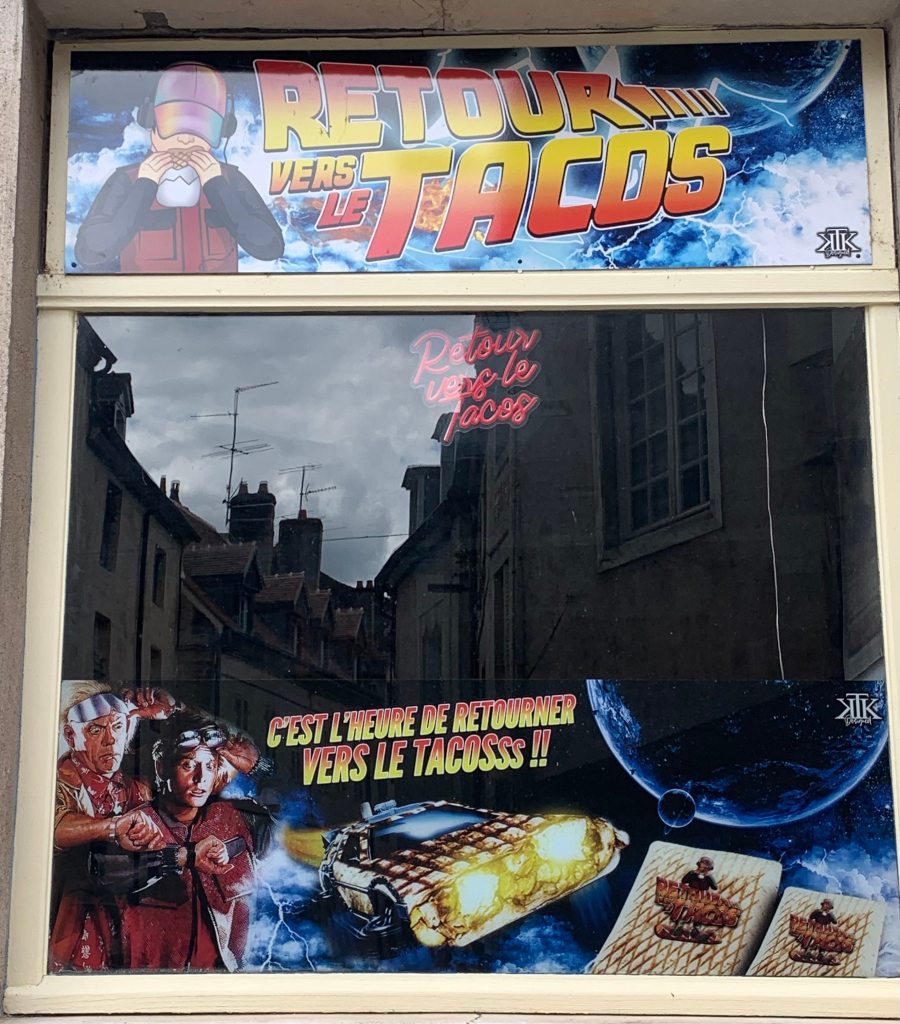
And, because there is always something we don’t understand, here is a little gem from Dole… I especially like the DeLorean as a waffle.
Besancon
From Dole we took two days to get to Besancon, the biggest city on this excursion with a population well over 100,000. We stopped at Ranchot, a little town the first night.
Our anchorage at Ranchot.
We wandered around the village and stumbled into a local artist exhibition in the chapel where Francis and Emilie bought a souvenir painting.
Lunch in Ranchot
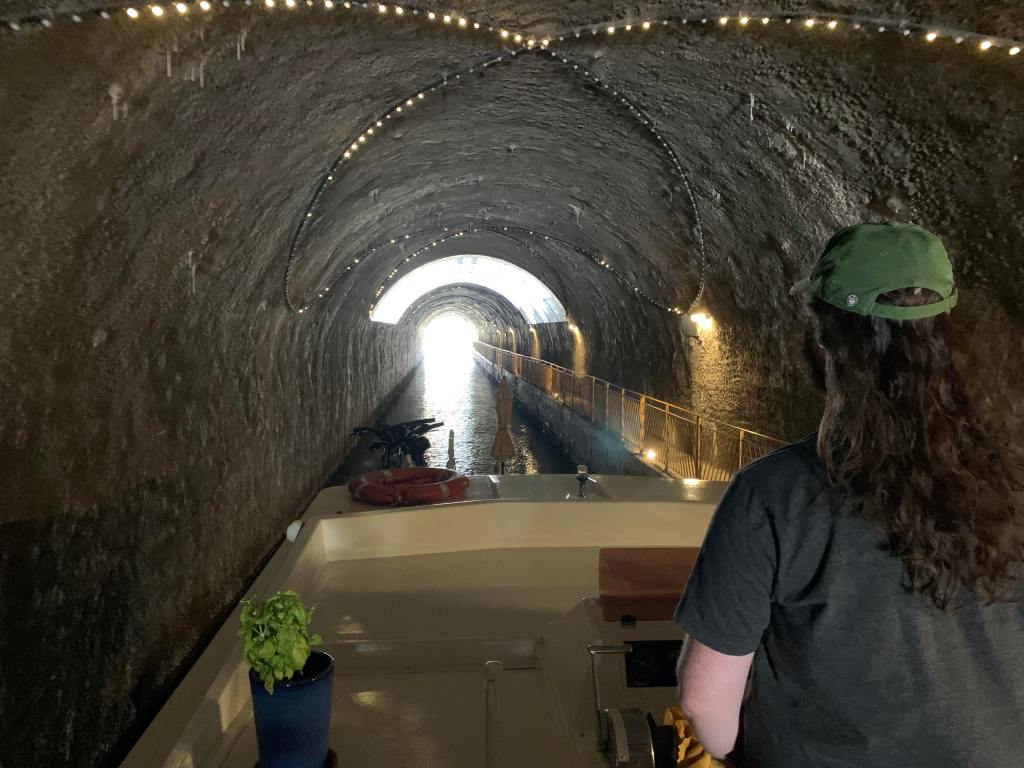
The trip from Ranchot to Besancon is highlighted by a short tunnel section and one double lock.
Entering the canal tunnel
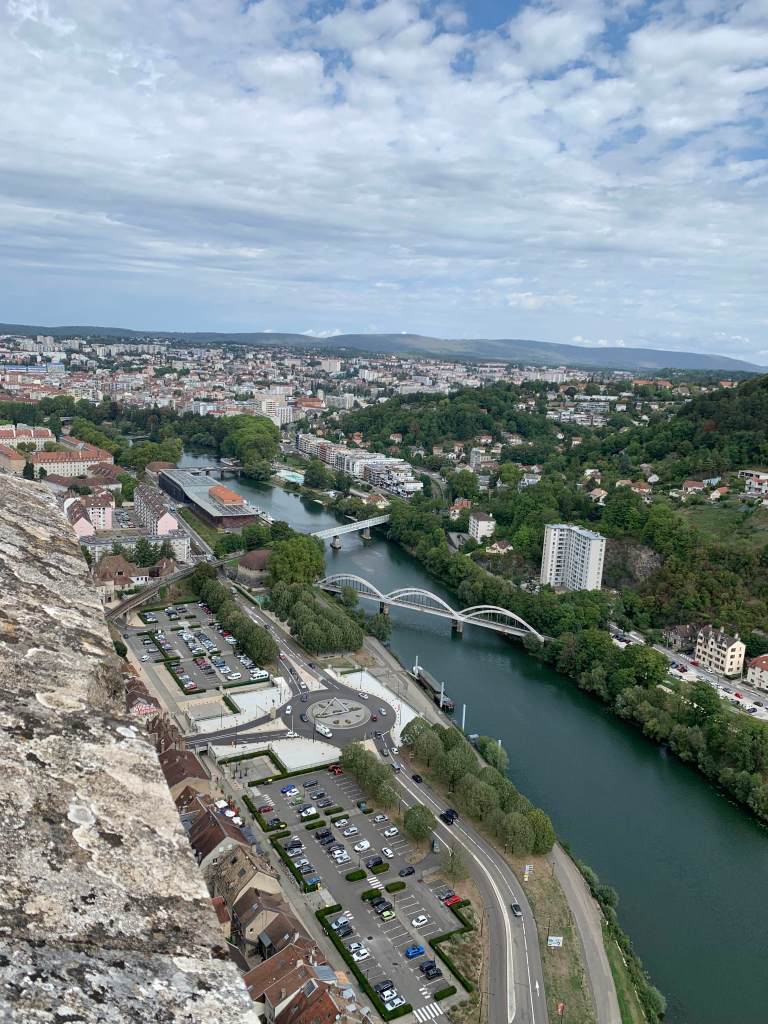
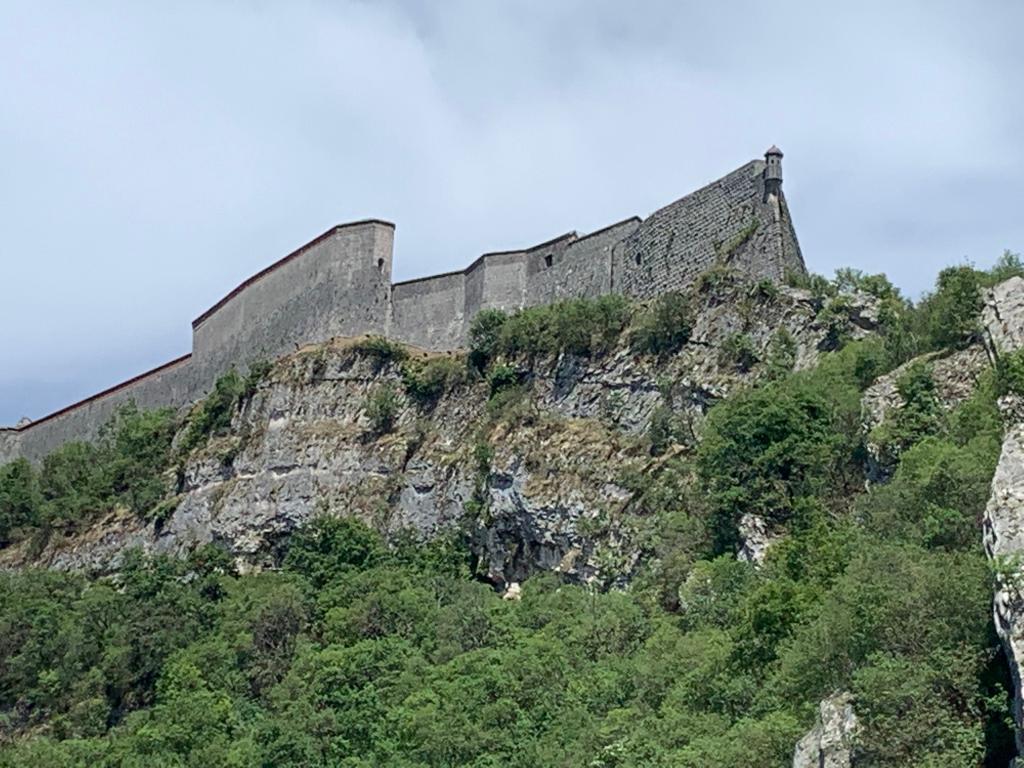
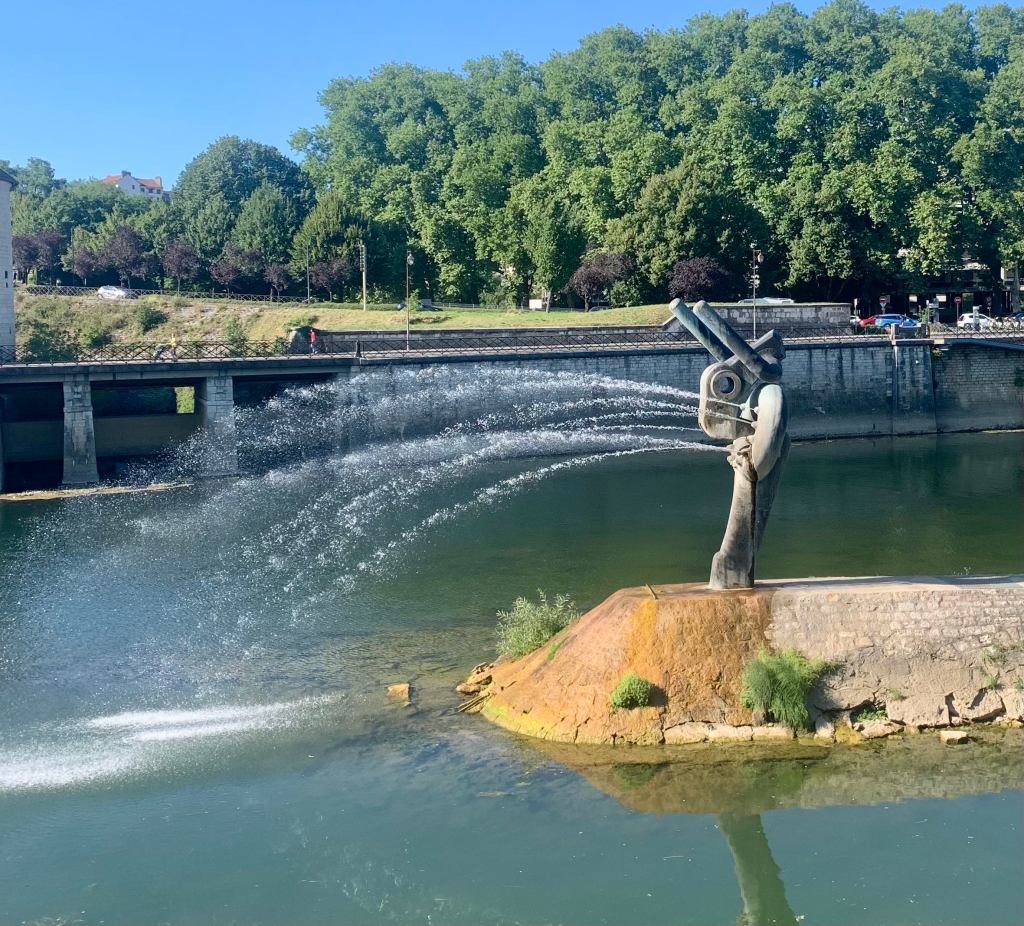
Besancon is a very old city (dating back to Roman times). The original city was on almost an island made by the Doube and easily defended. There are still remnants of huge fortifications above the city.
Old part of Besancon. Circle is where we moored.Fortifications overlooking the entrance to Besancon from the Doube.
We spent an afternoon at the Victor Hugo museum (he was born there) and did the tourist “Petite Train” ride around the city.
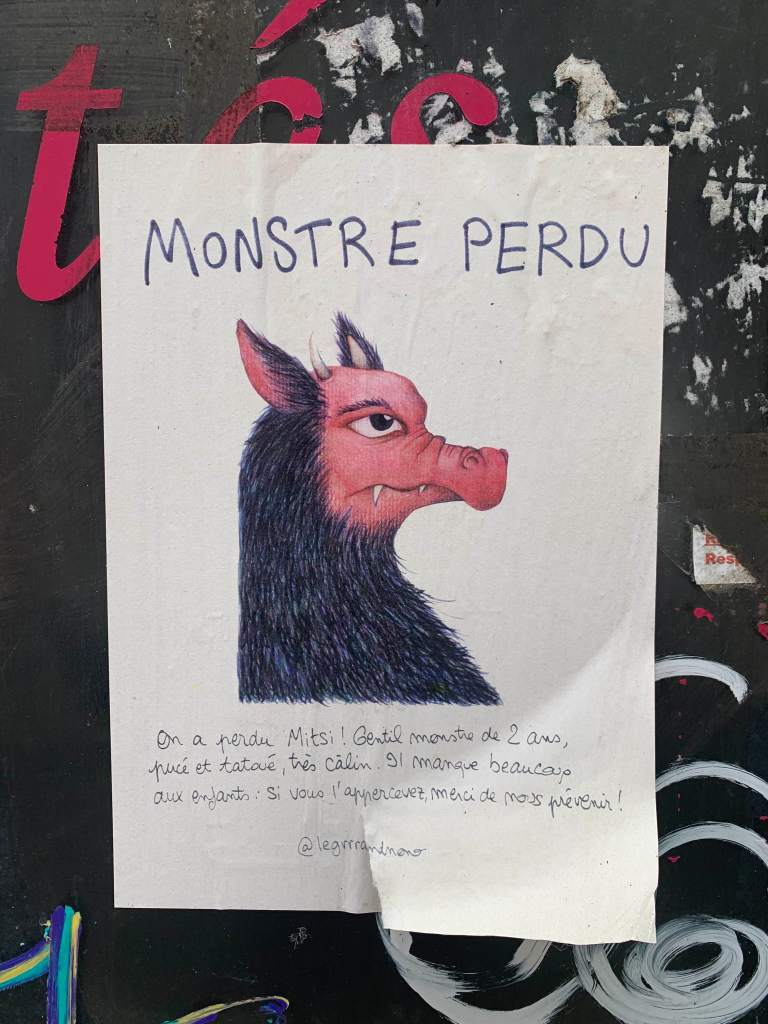
This region (Franche-Comte) was not part of France until the 17th century when it was conquered (by Louis 14?) (though it was also part of Spain – this is very confusing). And some people obviously think that was a mistake.
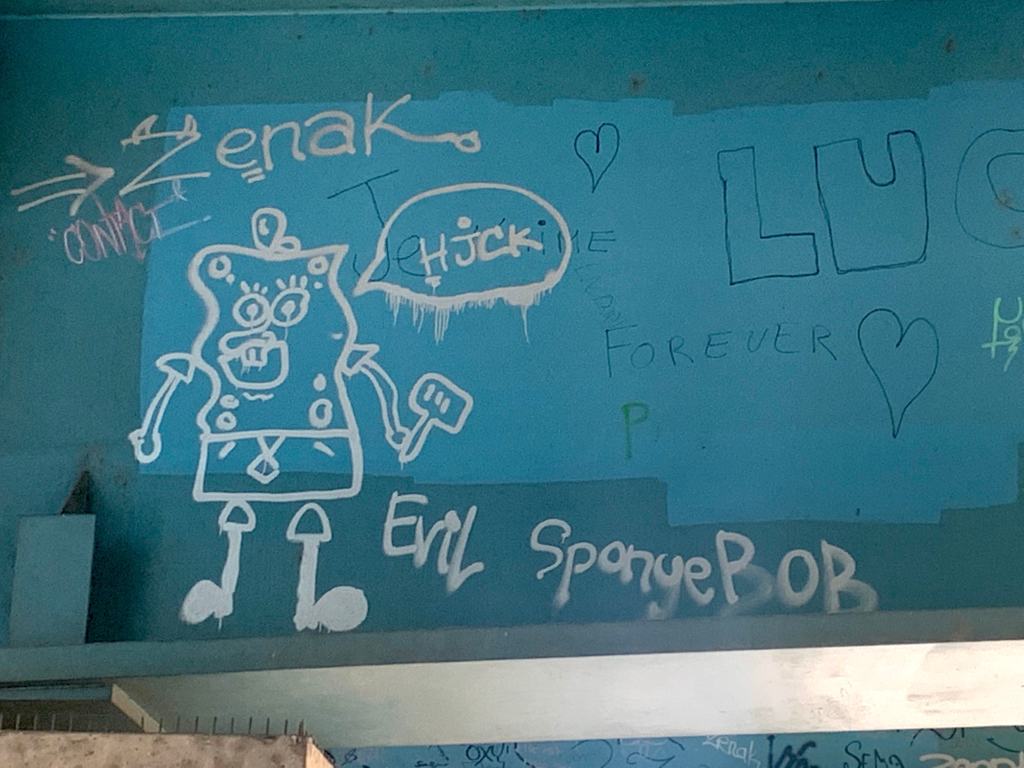
Myfavorite piece of graffiti in Besancon – Evil Spongebob!












































































 Our Adventures